Sourdough Discard Pancakes Recipe

Got a jar of sourdough discard begging to be used? These sourdough discard pancakes are your answer—fluffy, tangy, and ready in 30 minutes. No overnight ferment, no feeding the starter, no guilt about pouring another cup down the drain.
If you keep a starter, you know the drill: every feeding leaves you with discard, and it piles up fast. This recipe turns that tangy slurry into a proper weekend breakfast. One bowl of dry, one bowl of wet, a quick fold, and you’re at the griddle.
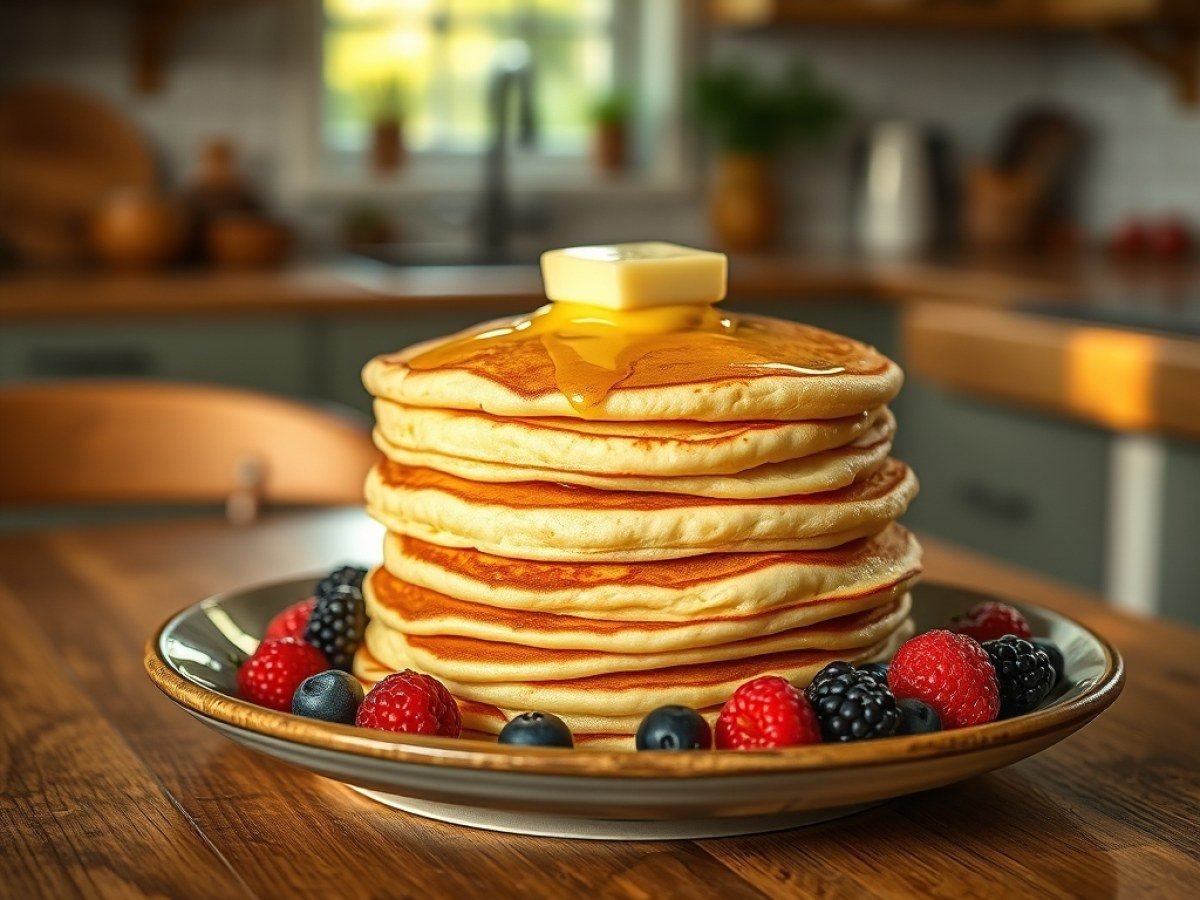
The result is a stack with crisp, lacy edges and a soft, tender middle—closer to buttermilk pancakes than anything sour. The discard brings a gentle tang that plays well with maple syrup and salted butter.
Why You’ll Love This Sourdough Discard Pancakes Recipe
No rise time required. Unlike most sourdough baking, this batter goes straight from bowl to pan. The discard is there for flavor and texture, not lift—baking powder and baking soda do that job in minutes.
Real tang, real tenderness. The acidic discard reacts with the baking soda, giving you extra browning and a soft crumb you simply don’t get from a standard pancake mix. It also keeps the pancakes moist longer.
Pantry-only ingredients. Flour, sugar, leaveners, salt, an egg, buttermilk, and butter. If you bake at all, you already have everything on hand.
Equipment You’ll Need
- Two large mixing bowls
- Whisk and a flexible spatula
- Nonstick skillet, cast-iron pan, or griddle
- 1/4-cup measuring cup or ladle
- Plate and foil for keeping the stack warm
Servings: 4 | Prep time: 10 minutes | Cook time: 20 minutes | Total time: 30 minutes
Ingredients
- 1 cup (240 g) sourdough discard (100% hydration, unfed)
- 1 cup (240 ml) buttermilk (or 1 cup milk + 1 tbsp lemon juice)
- 1 large egg
- 2 tbsp (25 g) granulated sugar
- 1 tsp vanilla extract
- 1 cup (125 g) all-purpose flour
- 1 tsp baking powder
- 1/2 tsp baking soda
- 1/2 tsp fine sea salt
- 2 tbsp (28 g) unsalted butter, melted, plus more for greasing
Instructions
- Mix the wet ingredients. In a large bowl, whisk together the 1 cup discard, 1 cup buttermilk, 1 egg, 2 tbsp sugar, and 1 tsp vanilla until smooth. Let it sit for 5 minutes to take the chill off the discard.
- Combine the dry ingredients. In a separate bowl, whisk the 1 cup flour, 1 tsp baking powder, 1/2 tsp baking soda, and 1/2 tsp salt. Press out any lumps with the back of your whisk—lumps become streaks of raw flour in the finished pancake.
- Make the batter. Pour the dry ingredients into the wet and stir with a spatula just until combined. A few lumps are fine—stop as soon as you see no dry patches. Gently fold in the 2 tbsp melted butter. Rest the batter for 5 minutes while you preheat the pan.
- Preheat the griddle. Heat a nonstick skillet or griddle over medium heat, about 350°F (175°C). Lightly grease with butter or oil. Test with a drop of water—it should sizzle and evaporate within a second or two.
- Cook the pancakes. Pour 1/4 cup batter per pancake onto the hot pan. Cook for 2–3 minutes, until bubbles rise and pop across the surface and the edges look matte and set. Flip and cook 1–2 minutes more, until the underside is golden brown.
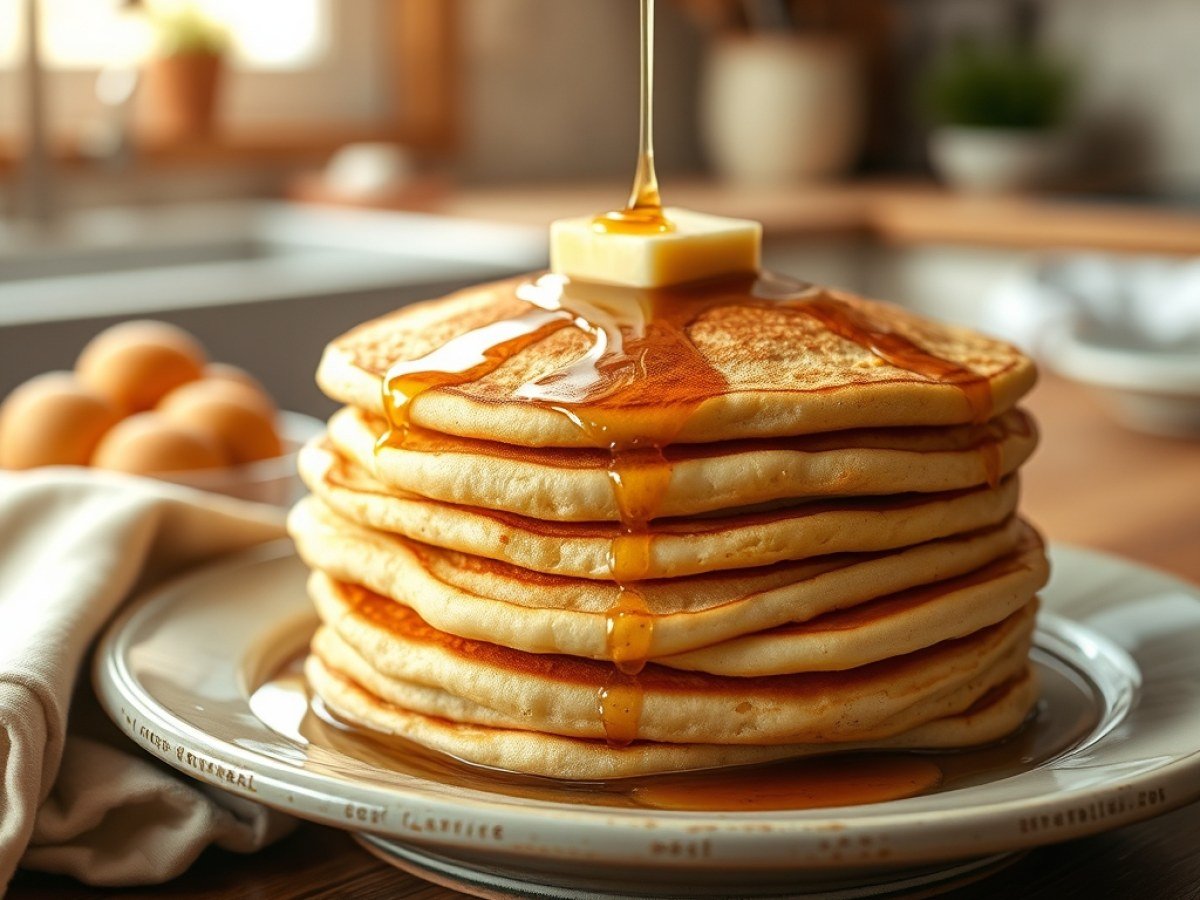
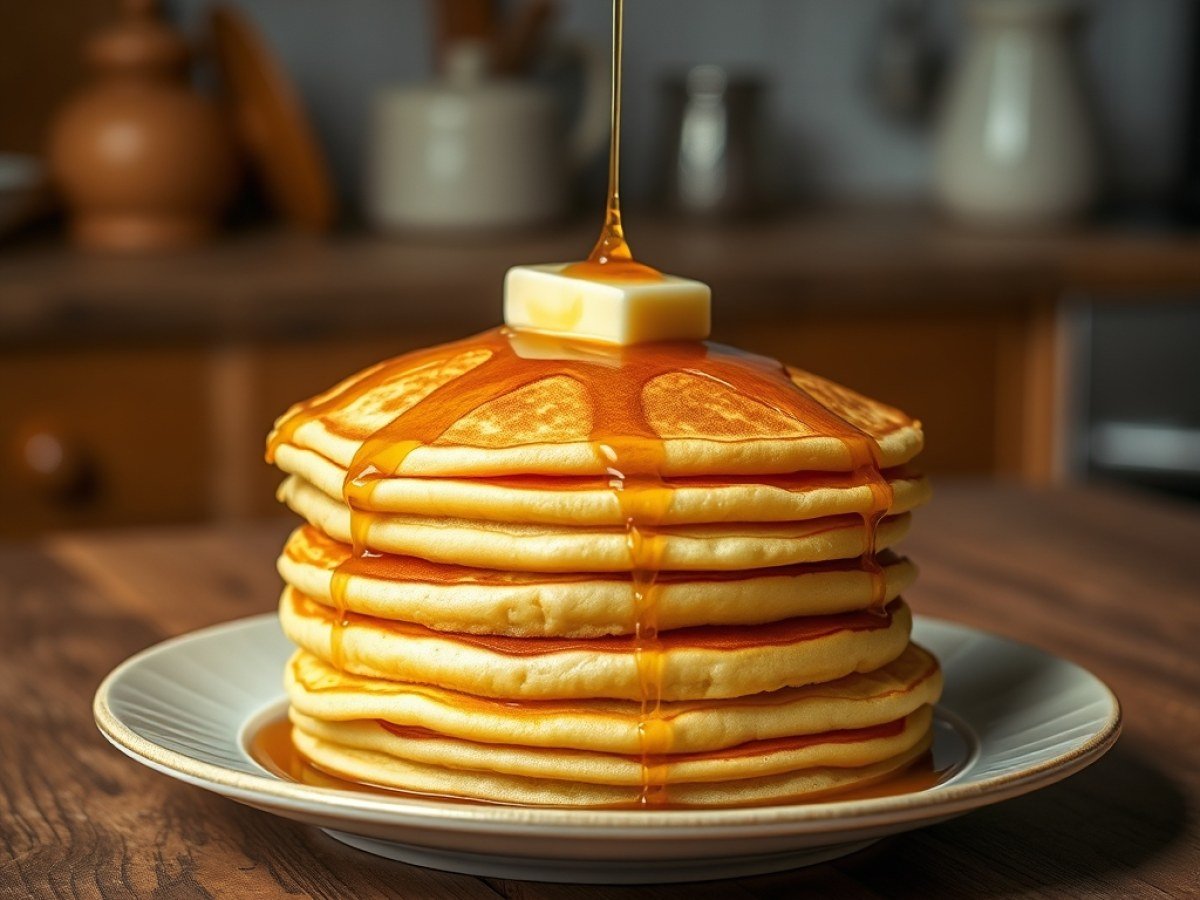
- Keep warm and serve. Transfer the cooked pancakes to a plate and cover loosely with foil while you cook the rest. Serve warm with maple syrup, butter, or fresh fruit.
Tips & Variations
Don’t overmix. Stop stirring the moment the flour disappears. Overworking the batter develops gluten, and gluten makes pancakes chewy instead of fluffy.
Tame a sour starter. If your discard has been sitting a while and smells sharply acidic, add an extra tablespoon of sugar. It balances the tang without making the pancakes sweet.
No buttermilk? No problem. Thin plain yogurt with a splash of milk until it pours like buttermilk, or use the milk-and-lemon-juice swap and let it sit 5 minutes to curdle.
Add-ins work beautifully. Fold a handful of chocolate chips or blueberries into the batter at the end. For blueberries, toss them in a spoonful of flour first so they don’t sink.
Go whole grain. Replace half the all-purpose flour with whole wheat. The pancakes come out slightly denser but with a nuttier flavor that suits the sourdough tang.
Mind the heat. Medium-low is your friend. A pan that’s too hot browns the outside before the middle sets, leaving a gummy center.
Freeze the extras. Leftover pancakes freeze better than they refrigerate—stack with parchment between each one and reheat straight in the toaster.
What to Serve With Sourdough Discard Pancakes
Keep it classic with salted butter and warm maple syrup, or go savory with a fried egg and bacon on the side. Fresh berries, sliced banana, and a spoon of Greek yogurt lighten the plate. A drizzle of honey and toasted pecans is a nice upgrade for brunch. And if you’re serving a crowd, a dish of whipped cream with a pinch of cinnamon never hurts.
Storage & Make-Ahead
Store leftover pancakes in an airtight container in the fridge for up to 3 days. Reheat in the microwave for 20–30 seconds or in the toaster for a crisper edge.
To freeze, place cooled pancakes in a single layer on a baking sheet and freeze until solid, about 1 hour. Transfer to a freezer bag and keep for up to 2 months. Reheat directly in the toaster—no thawing needed.
You can also mix the dry and wet ingredients the night before and combine them in the morning. Just stir gently and don’t let the batter sit longer than 15 minutes before cooking.
Nutrition Information
- Calories: 320 kcal
- Carbohydrates: 42 g
- Protein: 8 g
- Fat: 12 g
- Saturated Fat: 6 g
- Fiber: 1 g
- Sugar: 8 g
- Sodium: 480 mg
Values are an estimate per serving and will vary with your specific discard, buttermilk, and add-ins.
Questions About Sourdough Discard Pancakes
Can I use sourdough discard straight from the fridge?
Yes. Cold discard works fine—the 5-minute rest after mixing the wet ingredients takes the chill off so the butter doesn’t seize when it hits the bowl. Just stir the discard down first if it has separated.
Why are my pancakes flat?
Two usual culprits: overmixing, which develops gluten and deflates the batter, and dead leaveners. Check that your baking powder and baking soda are fresh—drop a pinch in warm water and it should fizz immediately.
Can I make these pancakes gluten-free?
Yes. Swap the all-purpose flour for a 1:1 gluten-free blend. The texture comes out a touch more delicate, so let the batter rest the full 5 minutes before cooking to help it hydrate.
Do I need to let the batter rest?
A 5-minute rest lets the flour hydrate and the leaveners start working, which gives you a fluffier pancake. It’s optional, but it costs you nothing while the pan heats up.
Can I double the recipe?
Absolutely. Use a large enough bowl to stir without spilling, cook in batches, and hold the finished pancakes in a 200°F oven on a sheet pan so everything stays warm until serving.