Quiche Lorraine Recipe

Most Quiche Lorraine recipes fail because they treat it like a quiche—loaded with cheese and cream—when the real magic is in the ratio of eggs to dairy and the technique. Too much cheese turns it into a heavy, rubbery casserole. Too much cream slows the set and leaves you with a weeping, soggy mess.
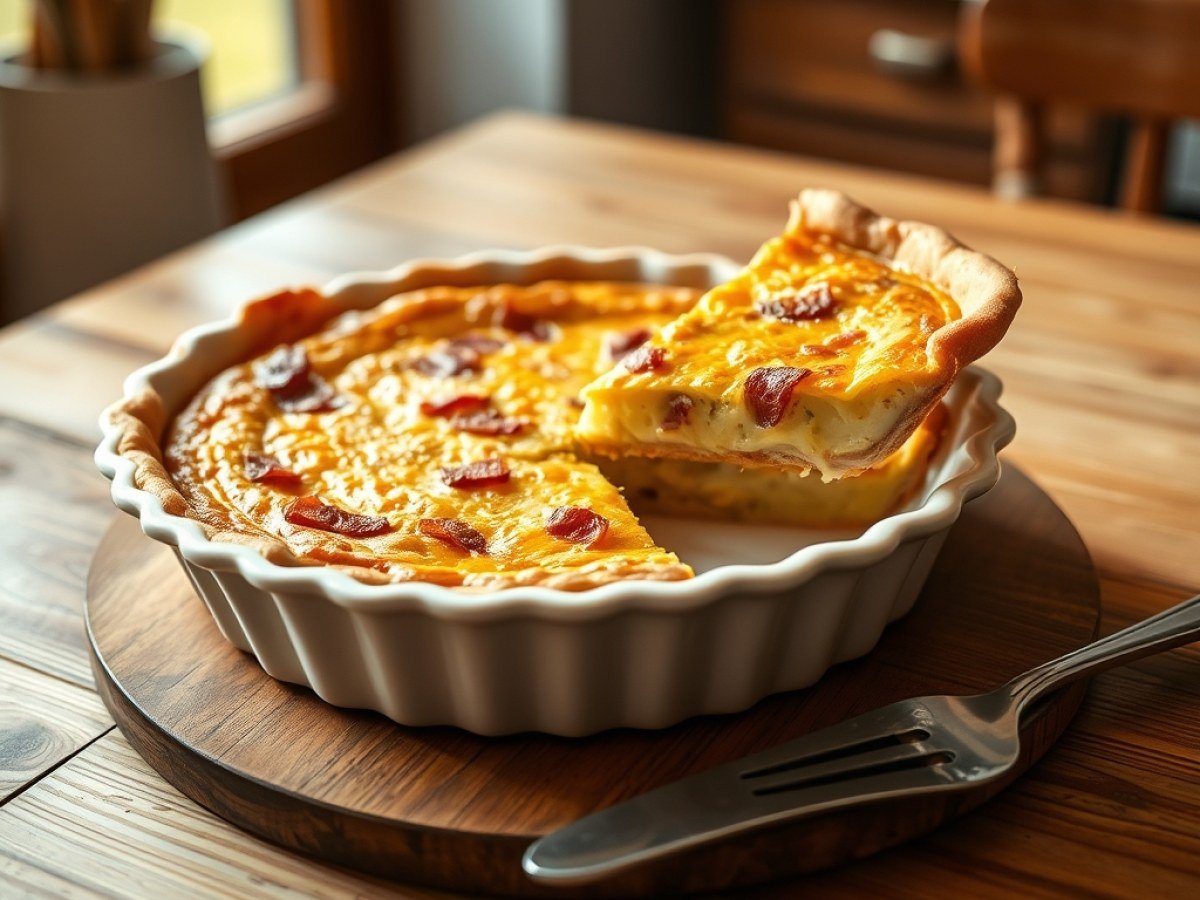
This recipe fixes that with a precise balance of whole eggs plus yolks, a cream-and-milk blend, and a custard that bakes up silky and sliceable. The bacon stays crisp, the Gruyère stays nutty and restrained, and the crust stays shatteringly flaky from the first cut to the last.
It’s the kind of dish that looks like you fussed for hours but comes together in an hour with a handful of ingredients. Perfect for brunch, a light dinner, or a make-ahead breakfast you’ll actually be excited to reheat.
The Secret to Great Quiche Lorraine
It’s a custard, not a cheese pie. The filling is mostly eggs and dairy with just enough Gruyère to season it. One cup of cheese is plenty—any more and the custard can’t set cleanly.
Blind baking is non-negotiable. Ten to fifteen minutes under pie weights develops a crisp, golden bottom that won’t turn to paste when the wet custard hits it.
Tempering saves the custard. Pouring hot cream into cold eggs scrambles them. Drizzling it in slowly while whisking keeps everything smooth.
The bake temperature matters. A low 325°F oven coaxes the custard to set gently without puffing, cracking, or turning rubbery around the edges.
Ingredients
Servings: 4 | Prep time: 20 minutes | Cook time: 40 minutes | Total time: 1 hour
- 1 9-inch unbaked pie crust (homemade or store-bought)
- 6 slices thick-cut bacon, chopped
- 1 cup heavy cream
- 1/2 cup whole milk
- 3 large eggs
- 2 large egg yolks
- 1/2 teaspoon salt
- 1/4 teaspoon black pepper
- 1/8 teaspoon freshly grated nutmeg
- Pinch of cayenne pepper
- 1 cup shredded Gruyère cheese (about 4 oz)
- 1 tablespoon butter, for greasing
Instructions
- Preheat and prepare the crust. Preheat oven to 375°F (190°C). Roll out the pie crust and fit it into a 9-inch pie dish, then crimp the edges. Line with parchment paper and fill with pie weights or dried beans. Blind bake for 15 minutes. Remove the weights and parchment, then bake another 5 minutes until lightly golden. Set aside and reduce the oven temperature to 325°F (160°C).
- Cook the bacon. While the crust bakes, cook the chopped bacon in a skillet over medium heat until crisp, about 8–10 minutes. Transfer to a paper towel-lined plate to drain. Reserve 1 tablespoon of bacon fat if desired for extra flavor.
- Prepare the custard. In a medium saucepan, heat the heavy cream and milk over medium-low until steaming but not boiling. In a separate bowl, whisk the eggs, egg yolks, salt, pepper, nutmeg, and cayenne. Slowly pour the warm cream mixture into the eggs, whisking constantly to temper. Stir in the cooked bacon.
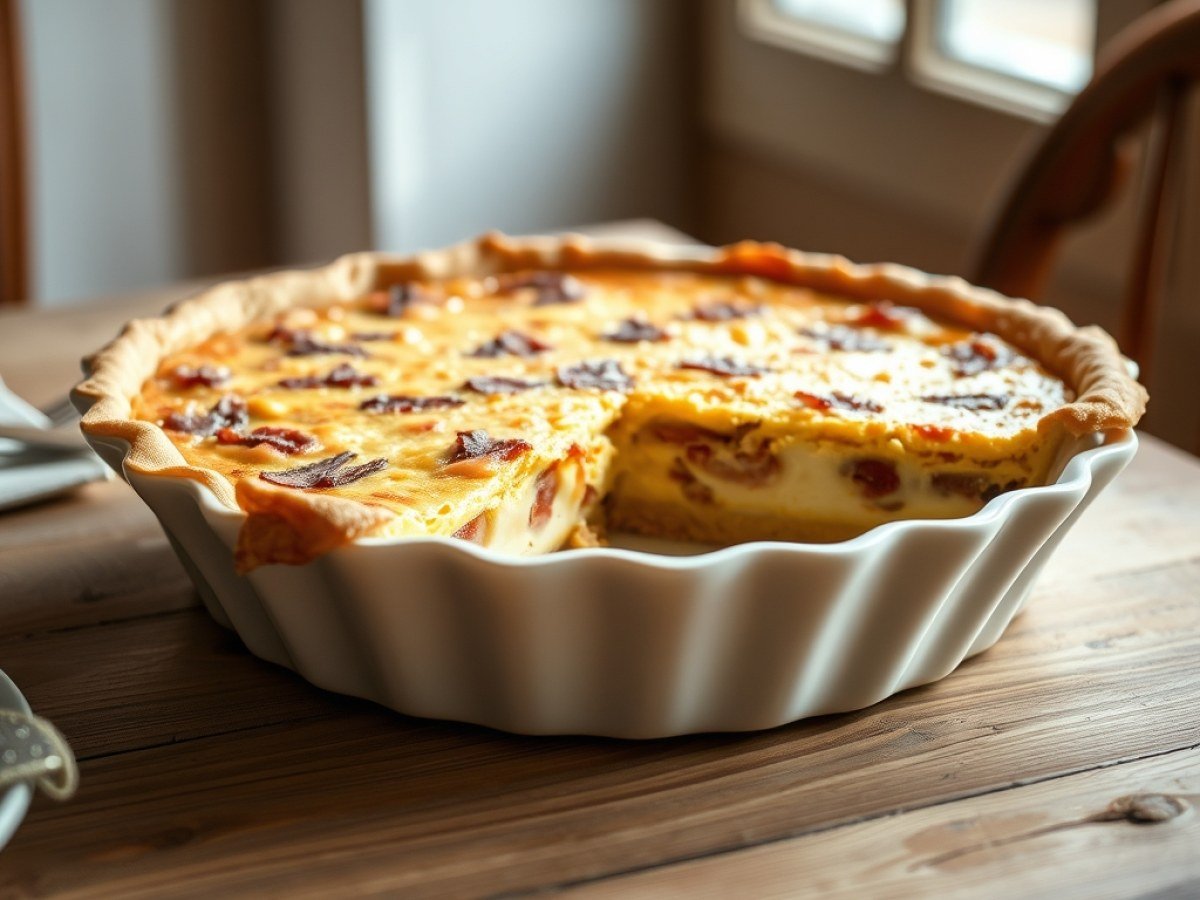
- Assemble the quiche. Sprinkle half the Gruyère over the bottom of the pre-baked crust. Pour the custard mixture over the cheese, then sprinkle the remaining cheese on top. If using, dot with the reserved bacon fat.
- Bake to set. Place the quiche on a baking sheet and bake at 325°F (160°C) for 30–35 minutes, until the center is just set and slightly jiggly. A knife inserted 1 inch from the edge should come out clean. If the crust browns too quickly, cover the edges with foil.
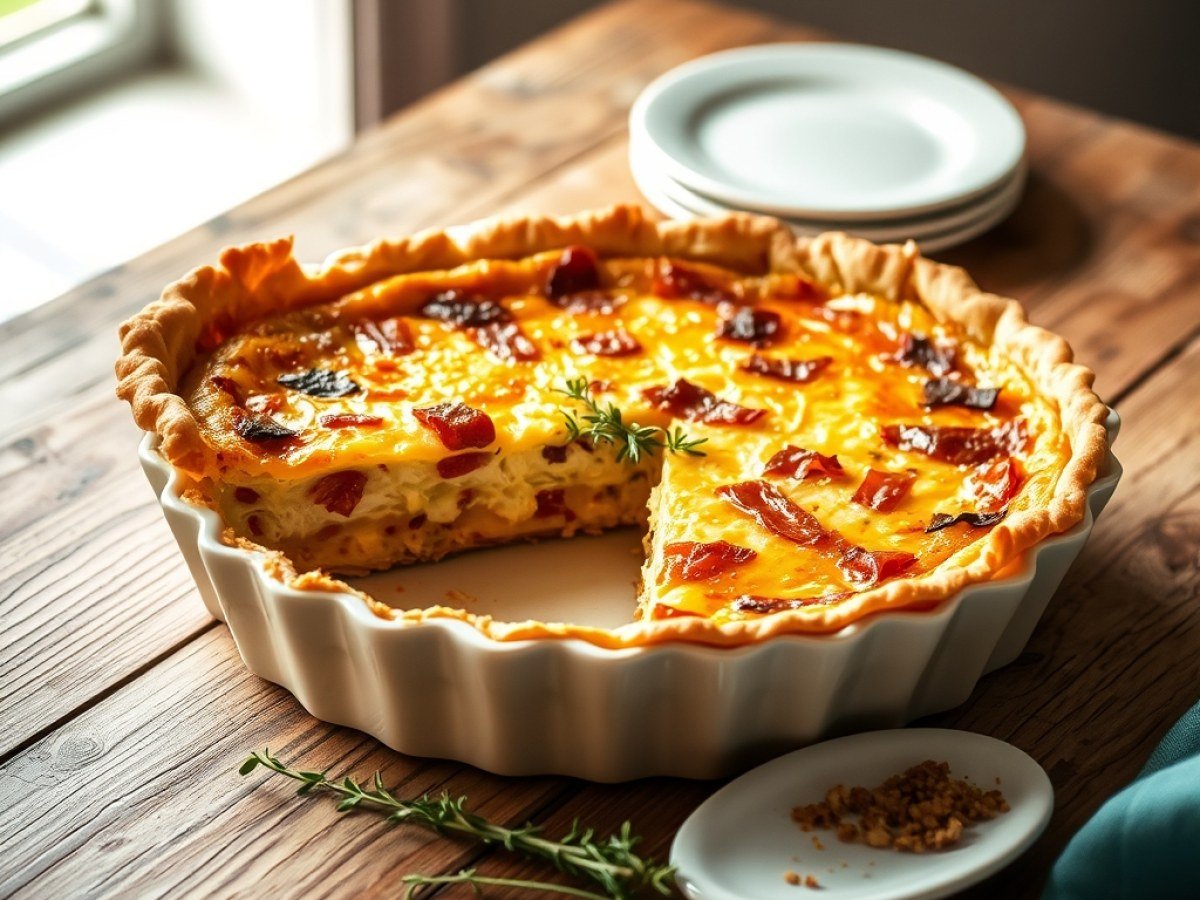
- Cool and serve. Let the quiche cool on a wire rack for at least 15 minutes before slicing. Serve warm or at room temperature.
Tips & Variations
Keep everything cold for flakier crust. Cold butter, cold water, minimal handling—warm dough develops gluten and bakes up tough instead of shattery.
Try a different alpine cheese. Swiss, Comté, or Emmental all work beautifully. Skip cheddar or mozzarella—they overwhelm the delicate custard.
Add alliums for depth. A handful of sautéed onions or leeks stirred into the custard adds a sweet, savory layer without changing the classic character.
Double up on the soggy-bottom defense. Brush the pre-baked crust with a beaten egg white and bake 2 more minutes before adding filling. The egg white seals the crust against moisture.
Guard the edges. Use a pie shield or a ring of foil after the first 20 minutes to keep the crimped edge from over-browning.
Go lighter. Substitute half-and-half for the cream and milk combo if you want a leaner custard—just expect a slightly firmer set.
Rest before slicing. That 15-minute cool-down isn’t optional. It lets the custard finish setting so your slices come out clean instead of runny.
What to Serve With It
A crisp green salad with a sharp vinaigrette cuts through the richness perfectly. Add a handful of arugula, shaved fennel, and lemon dressing for a fresh counterpoint.
For brunch, pair it with roasted cherry tomatoes, a fruit salad, or simple buttered toast points. A dry sparkling wine or a light Pinot Noir works beautifully alongside.
If you’re serving it as a dinner main, roasted asparagus or a bowl of spring pea soup rounds out the plate without competing with the quiche’s flavor.
Storage & Make-Ahead
Store leftover quiche tightly covered in the refrigerator for up to 3 days. Reheat in a 300°F oven for 10–15 minutes, or enjoy it cold straight from the fridge—it’s genuinely good both ways.
To freeze, wrap individual slices tightly in plastic wrap and foil, then freeze for up to 2 months. Thaw overnight in the refrigerator and reheat as above.
You can also bake the whole quiche up to 2 days ahead. Cool completely, cover, and refrigerate, then reheat at 300°F for 15–20 minutes before serving.
Nutrition Information
- Calories: 540
- Carbohydrates: 20 g
- Protein: 18 g
- Fat: 42 g
- Saturated Fat: 20 g
- Fiber: 1 g
- Sugar: 2 g
- Sodium: 690 mg
Values are an estimate and will vary based on your specific crust, cheese, and bacon.
Your Questions, Answered
Can I make Quiche Lorraine ahead of time?
Yes, you can bake the quiche up to 2 days in advance. Cool completely, then cover and refrigerate. Reheat in a 300°F oven for 15–20 minutes before serving.
Why is my quiche watery?
A watery quiche usually means the custard didn’t set properly or the crust wasn’t pre-baked. Make sure to blind bake the crust and bake the quiche until the center is just set with a slight jiggle. Overcooking can also cause curdling.
Can I use milk instead of cream?
You can, but the texture will be less rich. For best results, use a mix of cream and milk as written. If using all milk, add an extra egg yolk for creaminess.
What cheese is best for Quiche Lorraine?
Gruyère is traditional, but Swiss, Emmental, or Comté work well. Avoid mozzarella or cheddar, as they can overpower the delicate custard.
How do I know when the quiche is done?
The quiche is done when the edges are set and the center wobbles slightly when nudged. A knife inserted 1 inch from the edge should come out clean. It will continue to set as it cools.