Classic French Toast Recipe

Most French toast fails for the same two reasons: the bread is too fresh and the custard is too thin. Fresh bread is basically a sponge, so it drinks up a watery egg mixture and collapses into a soggy center. This recipe fixes both problems by starting with stale bread and using a rich, balanced custard that soaks in seconds.
If you’ve ever ended up with a gummy middle and pale, limp crust, that’s why. Good French toast needs bread with structure and a custard thick enough to cling instead of flood. Get those two things right, and the rest is just watching your heat.
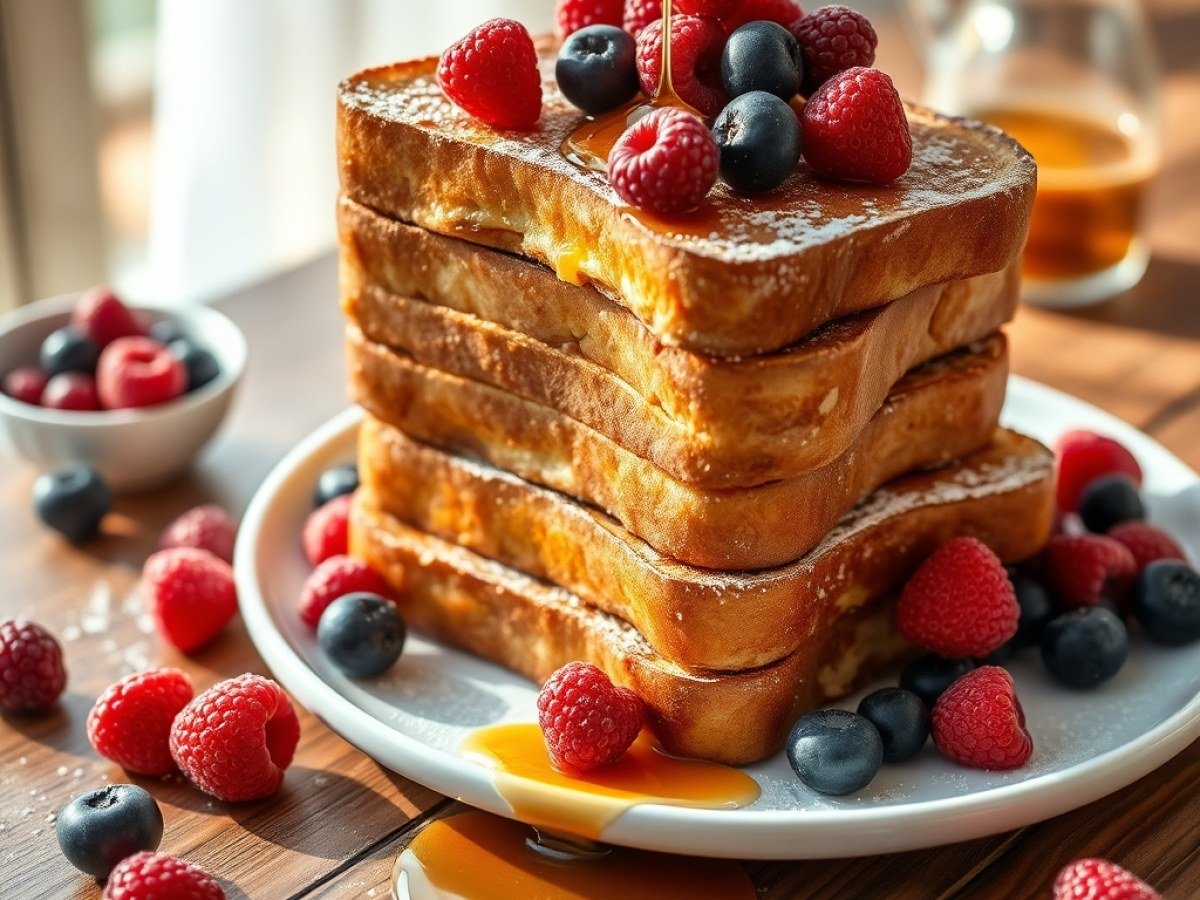
The result is crisp, golden edges around a soft, custardy interior, ready in about half an hour and easy to scale for a crowd.
The Secret to Great French Toast
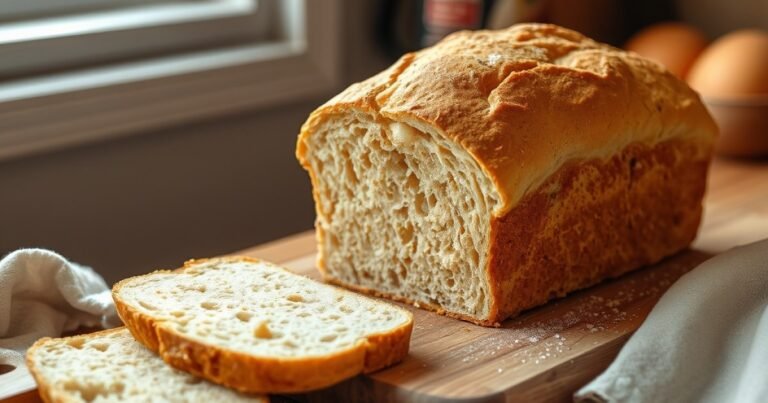
Using stale bread (or lightly toasted fresh bread) prevents sogginess and lets the custard cling without falling apart. That structure is what gives you a slice that holds its shape on the fork instead of crumpling.
A higher egg-to-milk ratio creates a custardy interior that sets firm, while a touch of sugar and vanilla enhances browning and flavor. A quick dip of 10–15 seconds per side ensures the bread absorbs enough custard without becoming mushy.
Medium-low heat with a mix of butter and neutral oil prevents burning and gives an even golden crust. The butter brings flavor; the oil raises the smoke point so the butter doesn’t scorch before the custard sets.
Servings: 4 | Prep time: 10 minutes | Cook time: 20 minutes | Total time: 30 minutes
Equipment You’ll Need
- A large nonstick skillet or griddle
- A shallow dish, like a pie plate, for the custard
- A wire rack set on a baking sheet (for keeping slices crisp)
- A whisk and a wide spatula
Ingredients
- 8 slices (1 inch thick) day-old challah, brioche, or French bread
- 4 large eggs
- 1 cup whole milk
- 2 tablespoons granulated sugar
- 1 teaspoon vanilla extract
- 1/2 teaspoon ground cinnamon
- 1/4 teaspoon salt
- 2 tablespoons unsalted butter, for cooking
- 1 tablespoon neutral oil (like vegetable or canola), for cooking
- Maple syrup, powdered sugar, and fresh berries, for serving (optional)
Instructions
- Prep the Bread. If your bread is fresh, spread the slices on a baking sheet and toast in a 300°F (150°C) oven for 5 minutes per side until dry but not browned. This mimics stale bread and prevents sogginess. You want the surface dry to the touch, not toasted golden.
- Make the Custard. In a shallow dish, whisk together the eggs, milk, sugar, vanilla, cinnamon, and salt until fully combined and slightly frothy. No streaks of egg should remain. A few bubbles on top are a good sign.
- Heat the Pan. Place a large nonstick skillet or griddle over medium-low heat. Add 1 tablespoon butter and 1/2 tablespoon oil. The butter should melt and sizzle gently without browning.
- Soak the Bread. Dip one slice at a time into the custard. Let it soak for 10–15 seconds per side, no longer, or it will fall apart. Lift and let excess custard drip back into the dish.
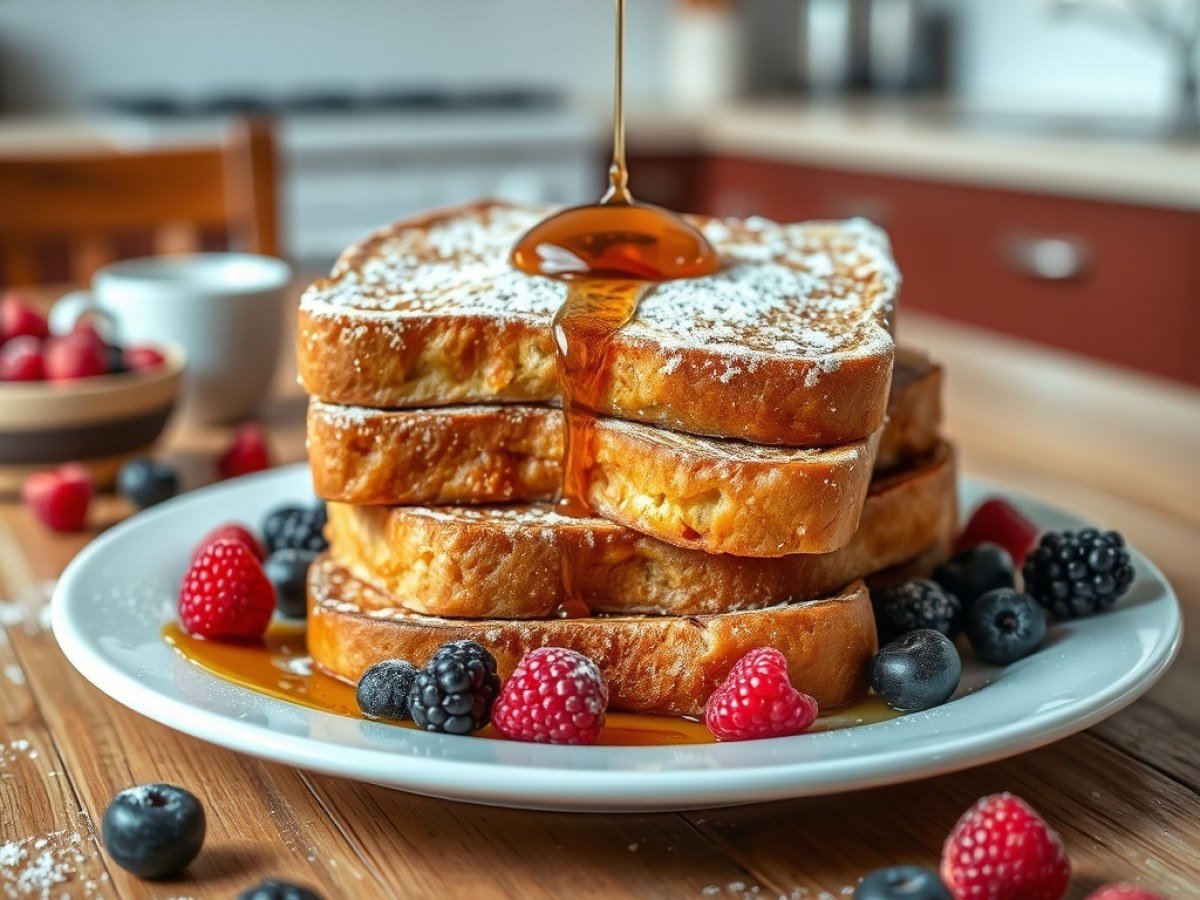
- Cook the French Toast. Place the soaked slices in the skillet, leaving space between them. Cook for 3–4 minutes per side, until deep golden brown and slightly puffed. Adjust the heat as needed to prevent burning. Repeat with the remaining bread, adding more butter and oil as needed.
- Keep Warm. Transfer the cooked French toast to a wire rack set on a baking sheet in a 200°F (95°C) oven while you finish the batch. This keeps slices crisp, not steamy.
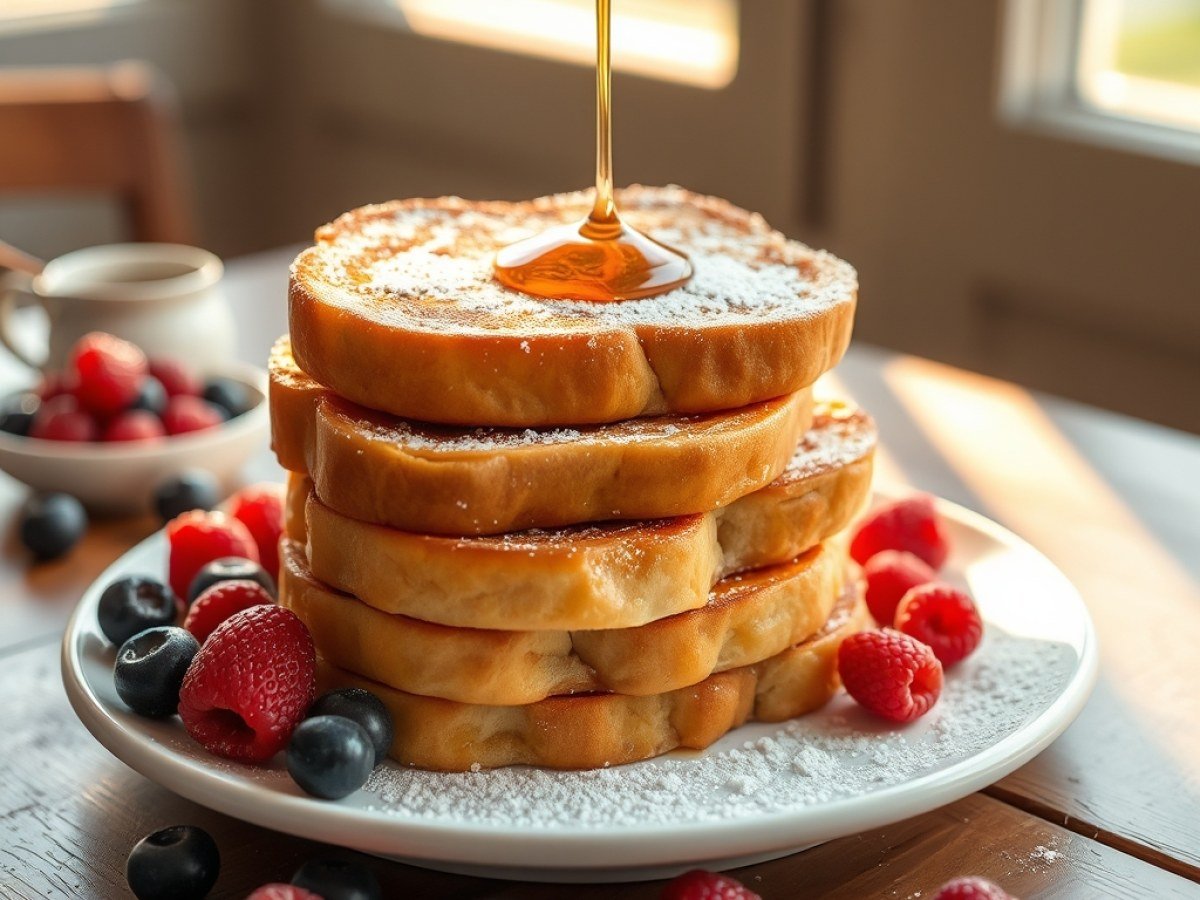
- Serve. Serve immediately with maple syrup, a dusting of powdered sugar, and fresh berries if desired.
Tips & Variations
Bread choice matters. Challah and brioche give a rich, tender crumb, while French bread offers a chewier texture. Avoid soft sandwich bread, which turns mushy.
For extra crunch, sprinkle a pinch of sugar on each slice right after flipping; it caramelizes for a crackly edge.
Swap the milk. For a dairy-free version, use oat milk or almond milk. For richer flavor, use half-and-half in place of milk.
Add flavor. Try 1/4 teaspoon almond extract or a pinch of nutmeg in the custard.
Make it ahead. Whisk the custard and store it covered in the fridge for up to 24 hours. Soak and cook the bread fresh.
Freeze leftovers. Cool completely, then freeze in a single layer. Reheat in a toaster or 350°F oven until hot and crisp.
Double the recipe. This custard easily scales. Use a larger dish and cook in batches.
Storage & Make-Ahead
Store leftover French toast in an airtight container in the refrigerator for up to 3 days. Reheat in a toaster, toaster oven, or 350°F oven for 5–7 minutes until hot and crisp. For make-ahead, prepare the custard up to 24 hours in advance and refrigerate; soak and cook bread just before serving. Freeze cooked slices for up to 2 months, separated by parchment paper.
Nutrition Information
- Calories: 420
- Carbohydrates: 45 g
- Protein: 14 g
- Fat: 20 g
- Saturated Fat: 8 g
- Fiber: 2 g
- Sugar: 10 g
- Sodium: 420 mg
These values are an estimate and will vary with your bread, milk, and toppings.
Your Questions, Answered
Can I use regular sandwich bread for French toast?
Yes, but it’s not ideal because it’s too soft and absorbs custard quickly, leading to sogginess. If using sandwich bread, use slightly stale slices and dip them for only 5–10 seconds per side. For best results, choose challah, brioche, or French bread.
Why is my French toast soggy in the middle?
Sogginess usually comes from soaking the bread too long or using fresh, soft bread. Use stale bread (or dry fresh bread in the oven) and dip it briefly, 10–15 seconds per side. Also, make sure your pan is hot enough to set the custard quickly without burning.
Can I make French toast without eggs?
Yes. Make a vegan version using 1 cup non-dairy milk, 2 tablespoons cornstarch, 2 tablespoons chickpea flour, 1 tablespoon maple syrup, and 1 teaspoon vanilla. Whisk until smooth and use as you would the egg custard. Cook on a well-oiled skillet over medium-low heat.