Fluffy Buttermilk Pancakes Recipe

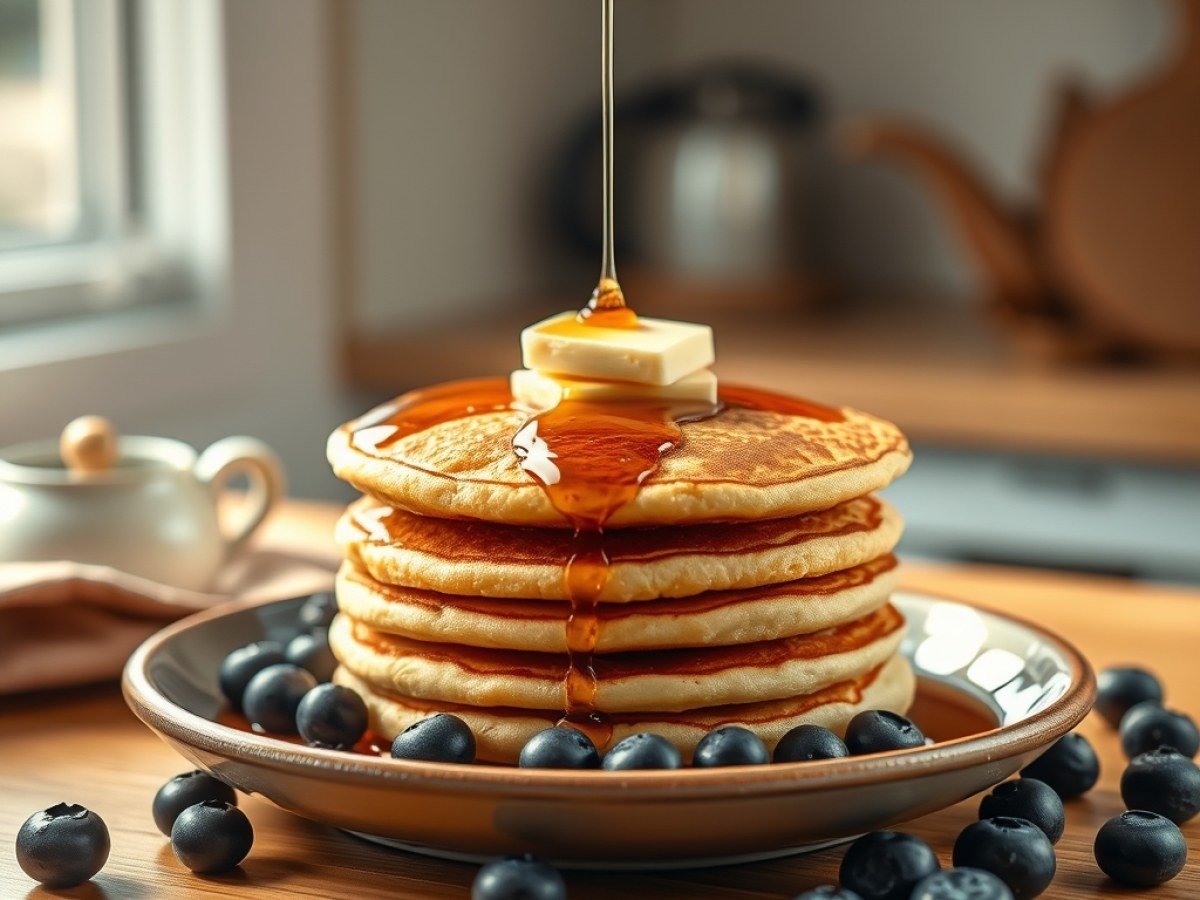
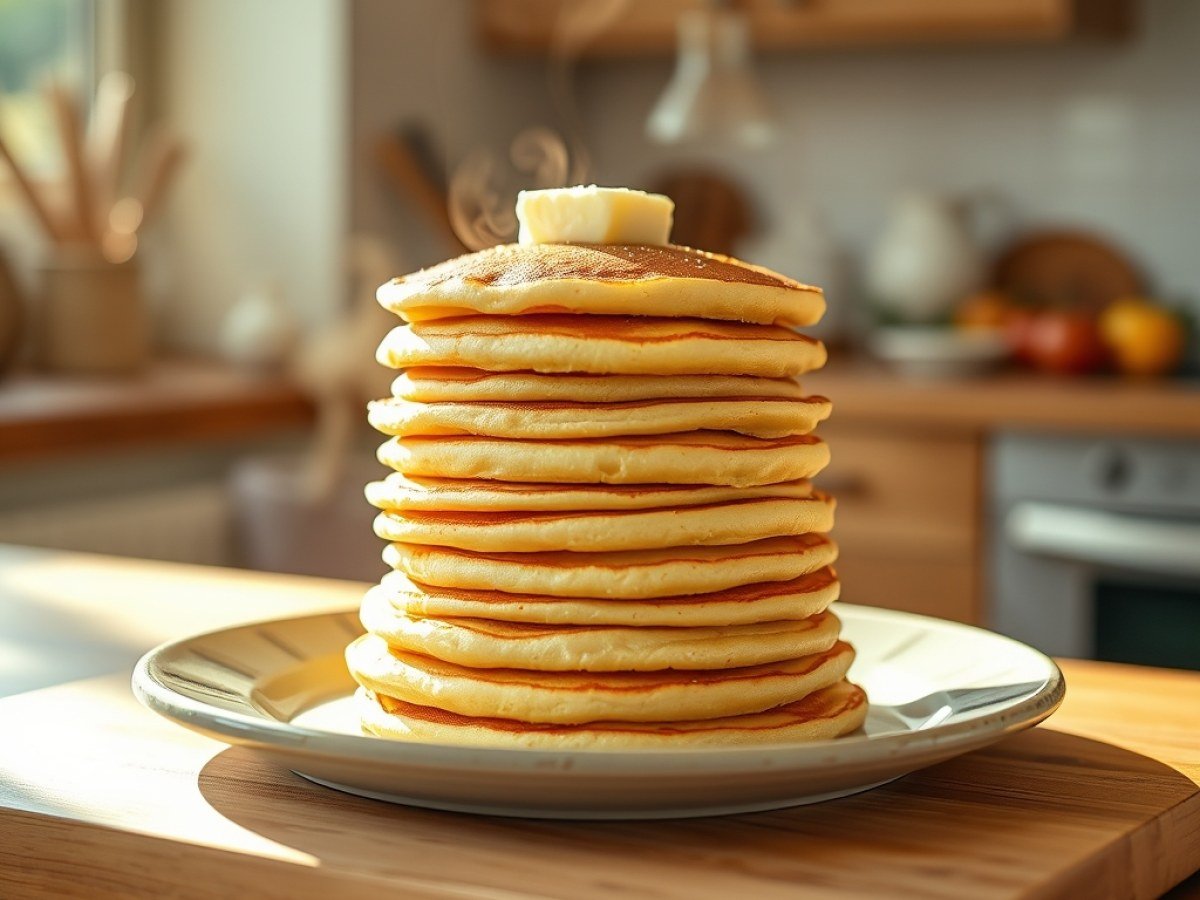
These fluffy buttermilk pancakes are the ones you’ll memorize: tall, tender, and tangy, with a golden crust that soaks up maple syrup like a dream. If you’ve been cycling through boxed mixes or flat, rubbery pancakes that never quite hit the mark, this from-scratch recipe is the fix. Buttermilk does the heavy lifting here—its acidity reacts with baking soda to create a lofty rise and a subtle tang, while a light hand with the spatula keeps the crumb airy. You’ll have a stack worthy of a weekend brunch in about half an hour, and the batter comes together in one bowl (plus a measuring cup) with pantry staples you probably already have. The techniques here are simple but specific: don’t skip the rest, don’t overmix, and don’t press down after flipping. Follow those three rules and you’ll get pancakes that are genuinely tall, not just in the picture.
Why This Recipe Works
Buttermilk’s acidity reacts with baking soda for a tender, lofty rise. A gentle folding technique keeps the batter airy—no tough pancakes here. And resting the batter hydrates the flour and lets the leaveners activate for maximum fluff. Together, those three moves are what separate a good pancake from a great one.
Servings: 4 (about 12 pancakes) | Prep time: 10 minutes | Cook time: 20 minutes | Total time: 30 minutes
Ingredients
- 2 cups all-purpose flour
- 2 tablespoons granulated sugar
- 2 teaspoons baking powder
- 1 teaspoon baking soda
- 1/2 teaspoon fine salt
- 2 large eggs
- 2 cups buttermilk (shake well before measuring)
- 1/4 cup unsalted butter, melted and slightly cooled, plus more for the pan
- 1 teaspoon vanilla extract
- Maple syrup, for serving
Instructions
- Whisk the dry ingredients: In a large bowl, whisk together 2 cups flour, 2 tablespoons sugar, 2 teaspoons baking powder, 1 teaspoon baking soda, and 1/2 teaspoon salt until evenly combined. Make a well in the center. Breaking up any lumps now means fewer lumps in the finished batter.
- Mix the wet ingredients: In a separate bowl or large measuring cup, beat 2 eggs until frothy. Whisk in 2 cups buttermilk, 1/4 cup melted butter, and 1 teaspoon vanilla until smooth. Let the melted butter cool slightly first—if it’s piping hot, it can scramble the eggs.
- Combine gently: Pour the wet ingredients into the well of the dry ingredients. Stir with a spatula just until the flour is incorporated—the batter will be lumpy. Do not overmix, or the pancakes will be tough. A few streaks of flour are fine; they’ll hydrate during the rest.
- Rest the batter: Let the batter rest at room temperature for 10 minutes while you preheat the griddle. It will thicken slightly and bubbles will begin to form. This short rest is what gives you that extra lift and a more tender crumb.
- Preheat the griddle: Heat a nonstick griddle or large skillet over medium heat. Test with a few drops of water: they should sizzle and evaporate. Lightly brush with butter. If your pan smokes, it’s too hot—drop the heat to medium-low.
- Cook the pancakes: Pour 1/4 cup batter per pancake onto the griddle, leaving 2 inches between. Cook for 2–3 minutes, until bubbles pop on the surface and the edges look set. Flip and cook for 1–2 minutes more, until golden brown. Resist the urge to press down with the spatula—it deflates the pancakes.
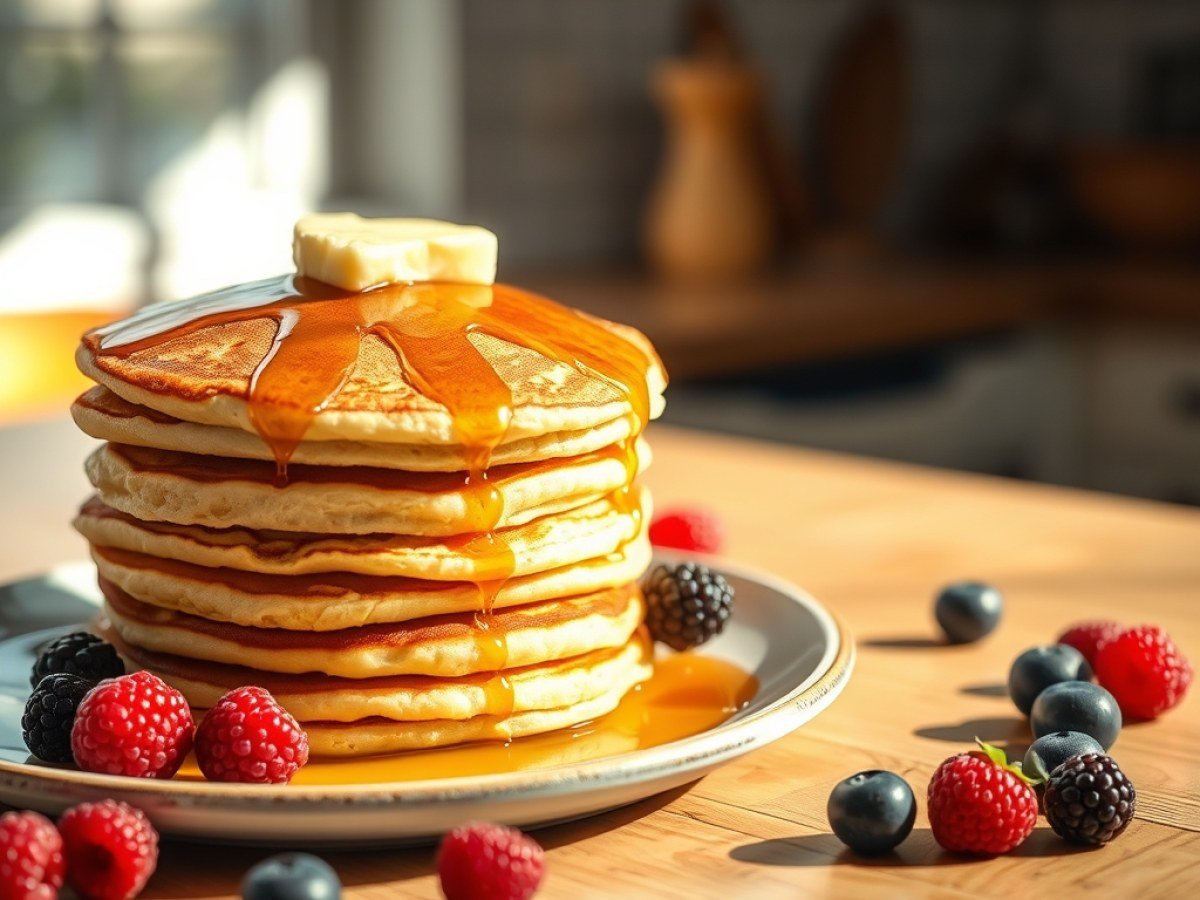
- Keep warm and serve: Transfer cooked pancakes to a plate and cover loosely with foil while you cook the remaining batter. Serve hot with maple syrup and extra butter.
Tips & Variations
- No buttermilk? Make a quick substitute: stir 2 tablespoons lemon juice or white vinegar into 2 cups milk and let sit 5 minutes.
- For extra-tall pancakes, use fresh baking powder and baking soda—check expiration dates.
- Don’t press down on the pancakes with the spatula after flipping; it deflates them.
- Add 1 cup chocolate chips, fresh berries, or chopped nuts to the batter for variation.
- For whole wheat pancakes, replace half the all-purpose flour with whole wheat and add 2 extra tablespoons buttermilk.
- Keep cooked pancakes warm in a 200°F oven on a wire rack set on a baking sheet to prevent sogginess.
Storage & Make-Ahead
Store leftover pancakes in an airtight container in the refrigerator for up to 3 days, or freeze in a zip-top bag with parchment between layers for up to 2 months. Reheat in the toaster, microwave, or a 350°F oven until hot. The batter can be made up to 1 day ahead and refrigerated; thin with a splash of buttermilk if needed.
Nutrition Information
- Calories: 420
- Carbohydrates: 54 g
- Protein: 12 g
- Fat: 17 g
- Saturated Fat: 9 g
- Fiber: 2 g
- Sugar: 12 g
- Sodium: 720 mg
Values are an estimate per serving and will vary with portion size and toppings.
FAQs
Can I make these pancakes without buttermilk?
Yes. For each cup of buttermilk, substitute 1 tablespoon lemon juice or white vinegar plus enough milk to make 1 cup; let sit 5 minutes. Or use plain yogurt thinned with milk.
Why are my pancakes flat?
Overmixing develops gluten and deflates the batter, and expired leaveners won’t rise. Stir just until combined and check your baking powder and soda dates.
Can I freeze the pancakes?
Absolutely. Cool completely, then freeze in a single layer on a baking sheet before transferring to a freezer bag. Reheat in a toaster or microwave.
How do I know when to flip?
Flip when bubbles form and pop on the surface, and the edges look dry and set—about 2–3 minutes. The underside should be golden brown.
What’s the best pan for pancakes?
A nonstick griddle or cast-iron skillet works best. Preheat over medium heat and lightly butter or oil between batches for even browning.