Cream Cheese Danish Recipe

Most homemade Danish recipes are basically brioche in disguise—soft, eggy, and nothing like the shatteringly flaky pastries you get at a bakery. If you’ve ever pulled a tray of “Danish” from your oven and gotten something closer to a sweet dinner roll, you’re not alone. The problem isn’t your skills. It’s the dough.
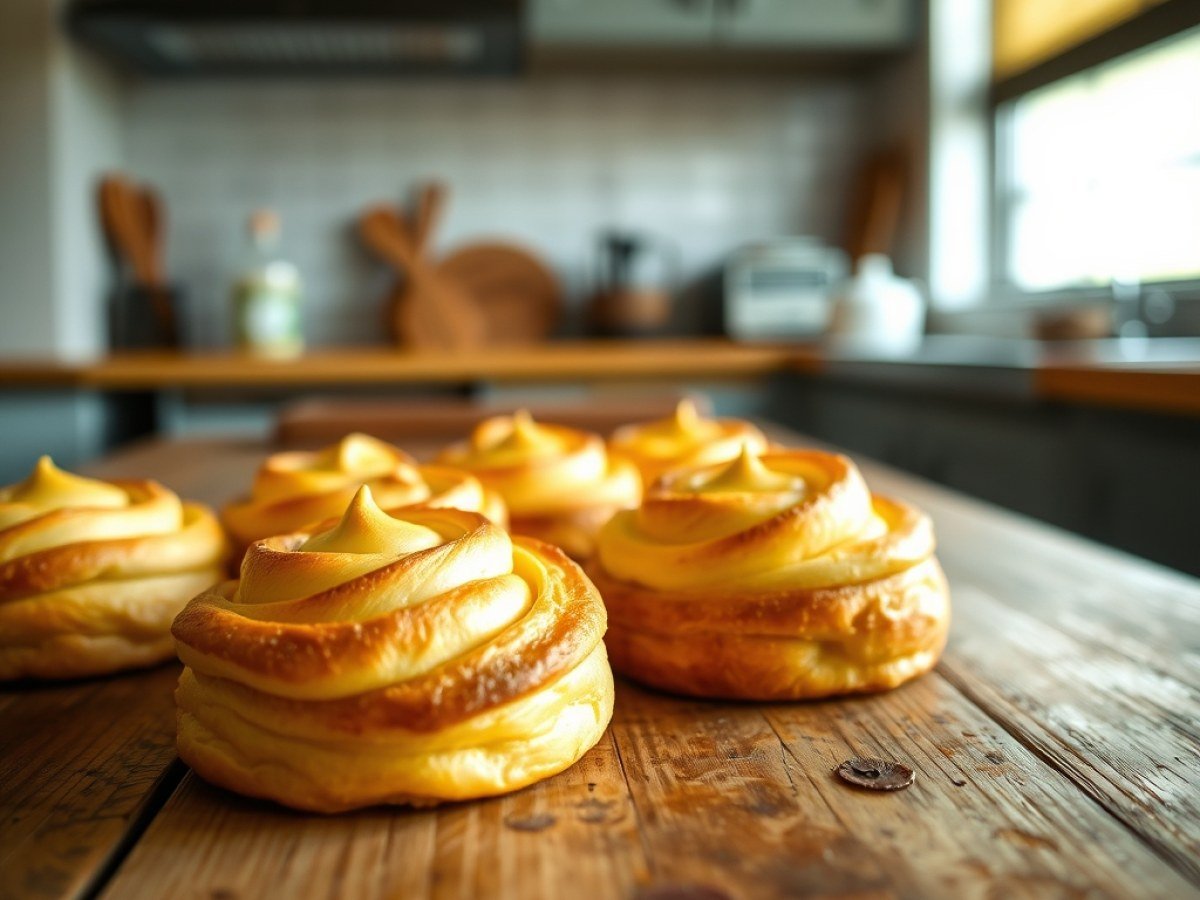
Real Danish pastry is laminated: butter gets folded into flour in thin sheets, and when it hits the oven, the water in that butter turns to steam and pushes the layers apart. That’s where the shatter comes from. This recipe uses a quick lamination that only needs three folds—no sheeter, no stand mixer, no counter covered in butter at the end.
The filling is tangy cream cheese, lightly sweetened and enriched with egg yolk and vanilla, so it bakes up creamy instead of grainy. Two hours of chilling do most of the work while you get on with your day.
Why This Recipe Works
We use a simplified lamination technique that requires only three folds, making it achievable for any home baker without sacrificing flakiness. Cutting cold butter into the flour first—rather than pounding a butter block into dough—means you get distinct butter streaks from the very start.
The cream cheese filling is lightly sweetened and enriched with egg yolk and vanilla, so it sets up creamy rather than grainy. The yolk adds richness and helps the filling hold its shape without turning rubbery.
Brushing the dough with egg wash and sprinkling with coarse sugar before baking gives the pastries a glossy, crunchy top that mimics professional bakery results. That demerara crust is the detail people notice first.
Servings: 4 pastries | Prep time: 30 minutes | Cook time: 20 minutes | Total time: 2 hours 20 minutes (includes chilling and proofing)
Ingredients
- 2 cups (250g) all-purpose flour, plus more for dusting
- 1 tablespoon granulated sugar
- 1 teaspoon instant yeast
- 1/2 teaspoon salt
- 1 cup (2 sticks; 226g) cold unsalted butter, cut into 1/2-inch cubes
- 1/2 cup (120ml) cold whole milk
- 1 large egg, for egg wash
- 1 tablespoon water, for egg wash
- 8 ounces (226g) cream cheese, softened
- 1/4 cup (50g) granulated sugar
- 1 large egg yolk
- 1 teaspoon vanilla extract
- 1/4 teaspoon salt
- Coarse sugar (like demerara), for sprinkling
Instructions
- Make the Dough: In a large bowl, whisk together flour, sugar, yeast, and salt. Add the cold butter cubes and toss to coat. Using your fingers or a pastry blender, cut the butter into the flour until the pieces are about the size of small peas—some larger, some smaller is fine. Pour in the cold milk and stir with a fork until a shaggy dough forms. Do not overmix; you should still see streaks of butter.
- First Chill: Turn the dough out onto a lightly floured surface and gently knead just until it comes together, about 30 seconds. Shape into a rough rectangle, wrap in plastic wrap, and refrigerate for at least 1 hour or up to overnight.
- Laminate the Dough: On a floured surface, roll the chilled dough into a 10×6-inch rectangle, about 1/2 inch thick. Fold the dough in thirds like a letter: fold the left third over the center, then the right third over that. Rotate the dough 90 degrees, roll again into a 10×6-inch rectangle, and fold in thirds again. Repeat this rolling and folding one more time (total of three folds). Wrap and chill for 30 minutes.
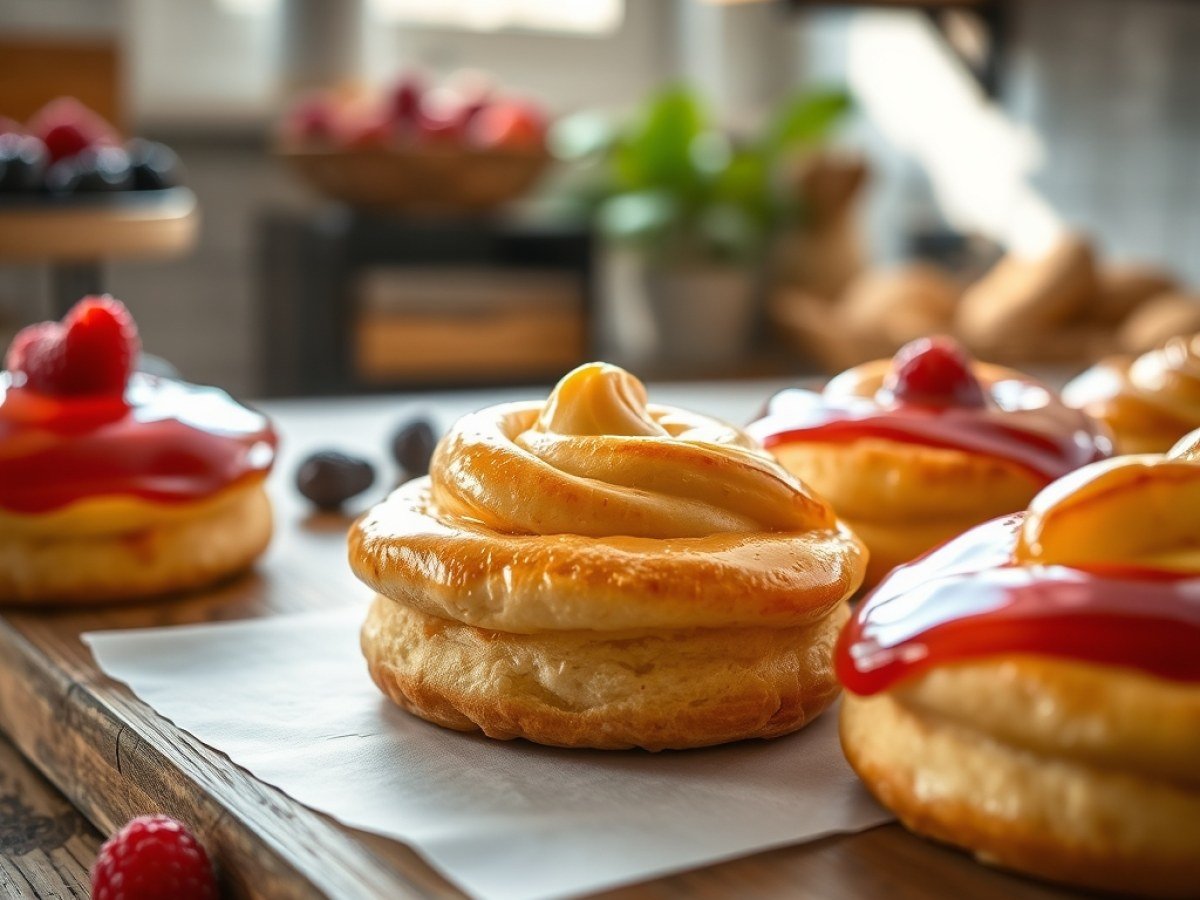
- Make the Cream Cheese Filling: While the dough chills, beat the softened cream cheese, sugar, egg yolk, vanilla, and salt in a medium bowl until smooth and creamy. Set aside at room temperature.
- Shape the Danishes: Roll the chilled dough into a 12×12-inch square, about 1/4 inch thick. Cut into four 6×6-inch squares. For each square, fold the corners toward the center, pinching to seal, forming a diamond shape with a depression in the middle. Alternatively, fold opposite corners over the filling to create a diamond. Place on a parchment-lined baking sheet, spacing 2 inches apart.
- Fill and Proof: Spoon 2 tablespoons of the cream cheese filling into the center of each danish, spreading slightly. Cover loosely with plastic wrap and let rise in a warm place for 1 hour, until puffed and slightly doubled. The dough should feel airy and spring back slowly when gently pressed.
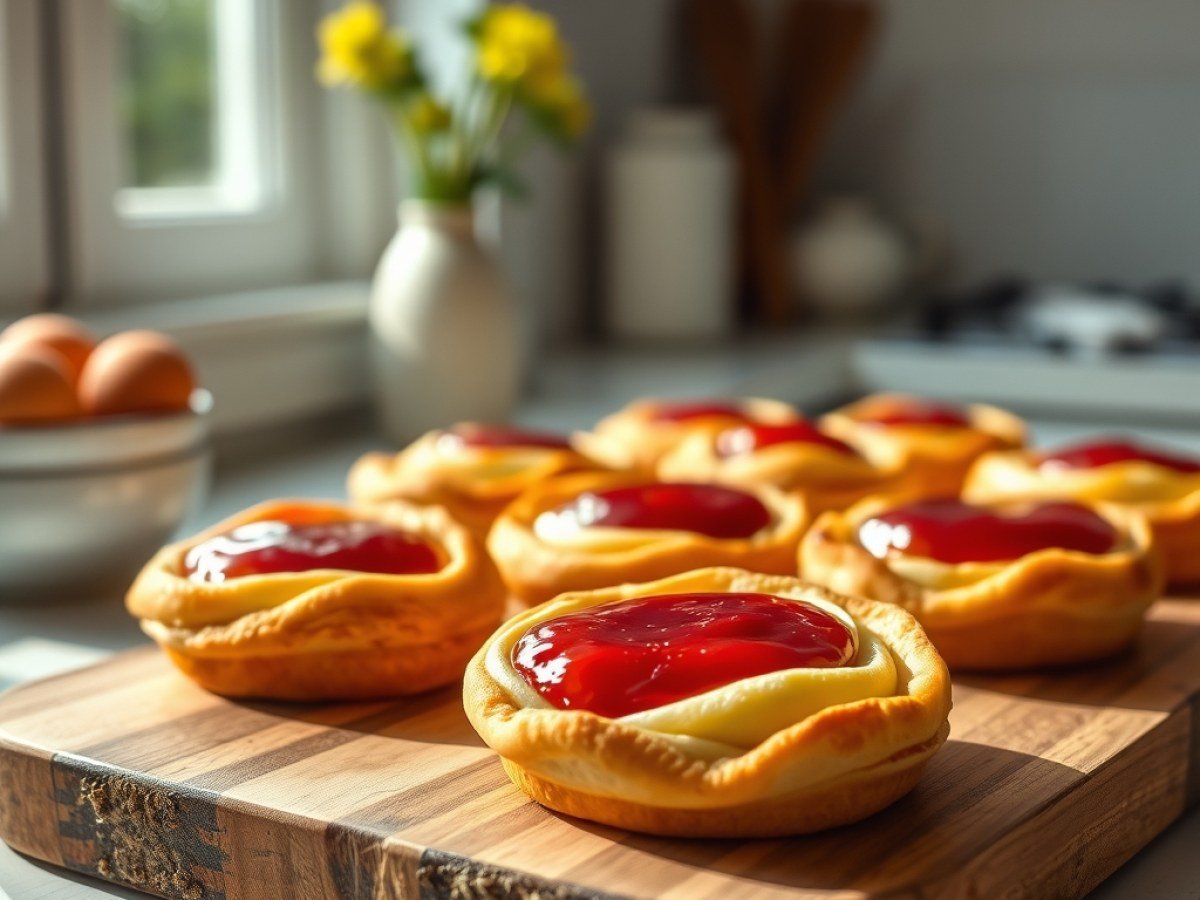
- Egg Wash and Bake: Preheat oven to 375°F (190°C). Beat the egg with water and brush the edges of the dough (not the filling) with egg wash. Sprinkle coarse sugar over the dough. Bake for 18–20 minutes, until the pastries are deep golden brown and the filling is set. Rotate the pan halfway through for even browning.
- Cool and Serve: Let the danishes cool on the baking sheet for 10 minutes, then transfer to a wire rack. Serve warm or at room temperature. They are best the day they are made.
Tips & Variations
Keep everything cold: If the butter starts to soften while laminating, pop the dough back in the fridge for 15 minutes. Cold butter creates steam during baking, which lifts the layers.
Add fruit: Before baking, press a few fresh raspberries or a slice of peach into the cream cheese filling for a fruity twist. Reduce sugar in the filling to 3 tablespoons if using sweet fruit.
Make ahead: After shaping and filling, cover and refrigerate the danishes overnight. In the morning, let them sit at room temperature for 30 minutes, then bake as directed. Add 2–3 minutes to baking time if needed.
Freeze baked danishes: Cool completely, then wrap individually in plastic wrap and foil. Freeze for up to 1 month. Reheat in a 350°F oven for 8–10 minutes.
Try a different filling: Swap the cream cheese for almond paste (mix 4 oz almond paste with 1 egg white and 2 tbsp sugar) or a thick jam.
Don’t overfill: Too much filling will spill out during baking. 2 tablespoons per danish is plenty.
For extra shine: After baking, brush the warm danishes with a simple syrup (1:1 sugar and water, boiled and cooled) for a glossy finish.
Storage & Make-Ahead
Store baked danishes in an airtight container at room temperature for up to 2 days. For longer storage, refrigerate for up to 5 days, but the texture is best fresh. To reheat, place in a 350°F oven for 5–7 minutes. Unbaked shaped danishes can be refrigerated overnight (see tips).
Nutrition Information
- Calories: 480 kcal
- Carbohydrates: 40 g
- Protein: 8 g
- Fat: 32 g
- Saturated Fat: 20 g
- Fiber: 1 g
- Sugar: 15 g
- Sodium: 310 mg
These values are an estimate and will vary based on exact ingredients and portion sizes.
Questions About Cream Cheese Danish
Can I use puff pastry instead of making the dough from scratch?
Yes, you can substitute store-bought puff pastry for a quicker version. Thaw according to package directions, cut into squares, fill, and bake at 400°F for 15–20 minutes. However, the homemade dough is more tender and buttery, and the texture is closer to a traditional Danish.
My dough is sticky and hard to handle. What went wrong?
The dough likely got too warm. Work quickly and return it to the fridge as soon as it starts to feel soft. Also, be careful not to overwork the dough when adding milk; a shaggy dough is fine. Chilling is key to firming up the butter.
How do I know when the danishes are done baking?
They should be deep golden brown on the edges and the filling should look set, not jiggly. If the filling starts to brown too much, tent with foil. An instant-read thermometer inserted into the dough should read about 200°F.
Can I make these gluten-free?
You can try a gluten-free all-purpose flour blend, but the texture will be different—less flaky and more crumbly. Use a blend that contains xanthan gum and chill the dough thoroughly. The lamination process is more difficult with gluten-free dough, so handle it gently.