Amish Friendship Bread Recipe

Ever been handed a Ziploc bag of beige batter with a printed note taped to it? That’s Amish Friendship Bread starter — and the loaf it makes is a tender, cinnamon-sugar-crusted quick bread worth every one of those ten days.
It’s called “friendship” bread because the starter multiplies every time you feed it, so you’re always baking for yourself and passing a cup along to someone else. The recipe below is the from-scratch version I actually make — real flour, real eggs, a slow low bake, and two crackly ribbons of cinnamon sugar running through the middle.
If you’ve inherited a starter and the note lost half its instructions, don’t panic. Everything you need is here: the loaf, how to keep the starter alive, and a no-starter shortcut if you just want bread tonight.

The Secret to Great Amish Friendship Bread
The starter does double duty. Its wild yeast and friendly bacteria add a faint tang and a little extra lift, while the buttermilk and oil keep the crumb soft for days — quick bread needs both tenderness and structure, and this recipe delivers both.
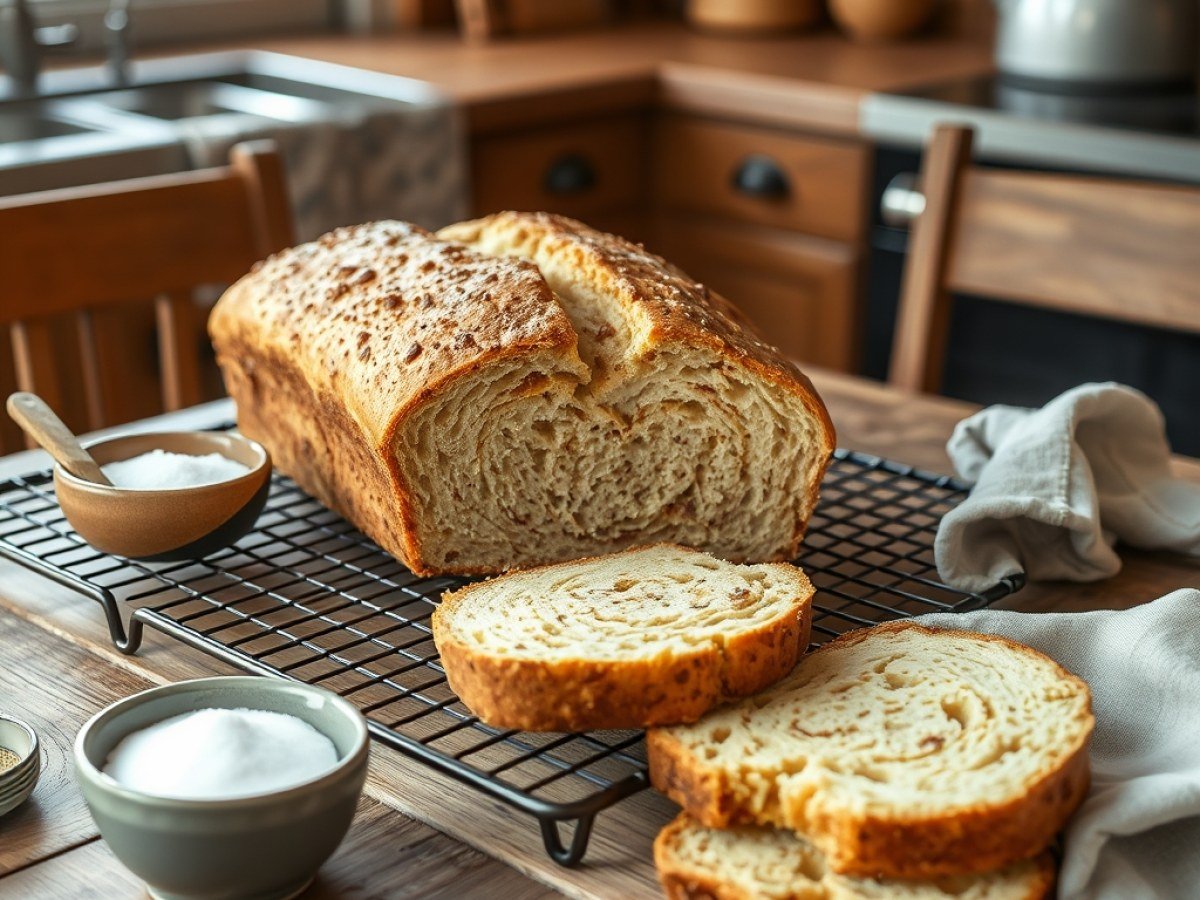
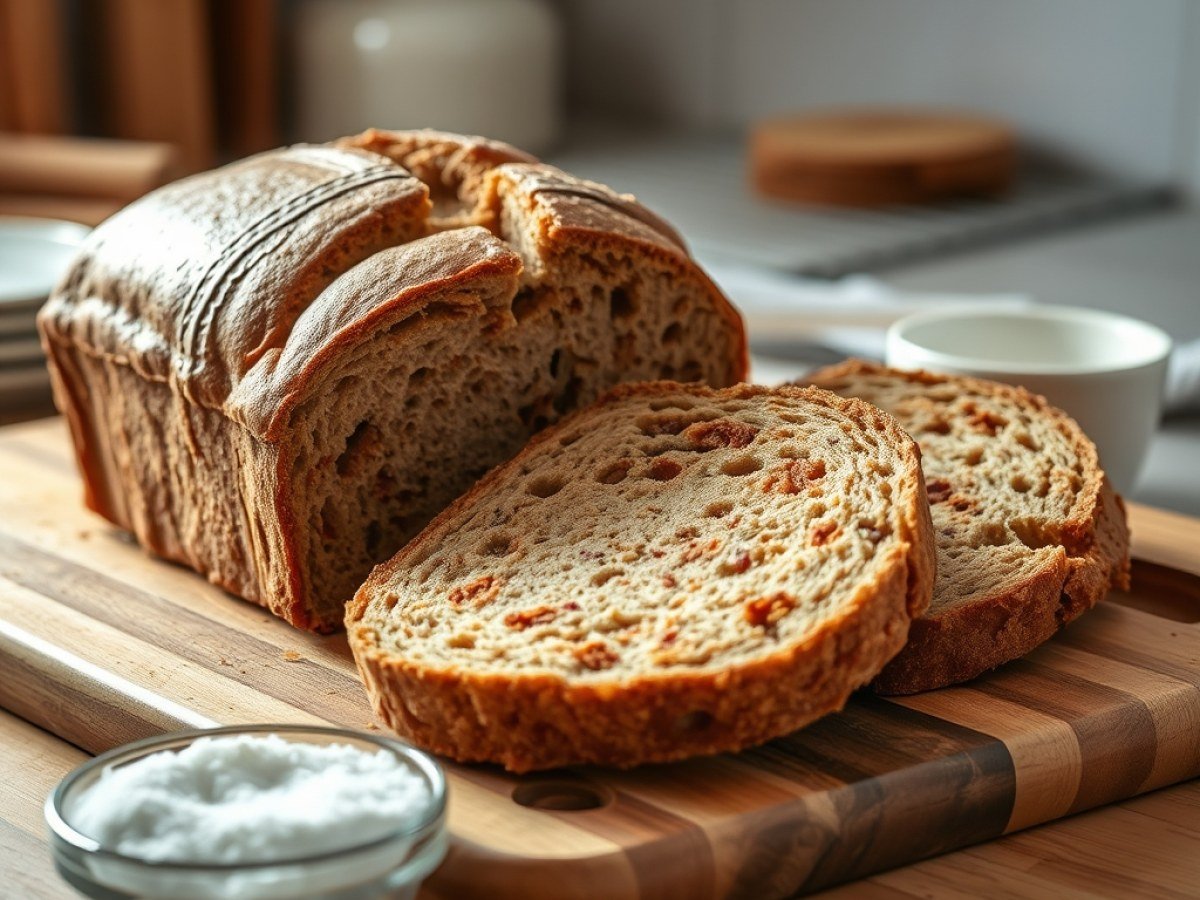
Cinnamon sugar isn’t just a topping here. Two full layers inside the loaf create crackly, caramelized ribbons that make each slice look and taste like something from a bakery case.
The bake is deliberately slow and low — 325°F for about an hour — so the center sets without the outside drying out. The single biggest mistake with this bread is rushing it at 350°F and ending up with a gummy middle.
Instant pudding mix sounds like a shortcut, but it’s the classic Amish Friendship Bread trick: it locks in moisture and vanilla flavor, keeping the loaf plush for three or four days on the counter.
Equipment You’ll Need
- Two 9×5-inch loaf pans
- A large mixing bowl and a medium bowl for dry ingredients
- A whisk and a silicone spatula
- Measuring cups and spoons
- An instant-read thermometer (optional but very helpful)
- Parchment paper for a sling, if you like
Ingredients
Servings: 2 loaves (about 8 slices each) | Prep time: 20 minutes | Cook time: 60 minutes | Total time: 1 hour 20 minutes
- 1 cup Amish Friendship Bread starter (room temperature, well stirred)
- 3 large eggs, room temperature
- 1/2 cup neutral oil (canola or vegetable)
- 1/2 cup whole milk or buttermilk
- 1 teaspoon vanilla extract
- 1 cup granulated sugar
- 2 cups all-purpose flour
- 1 1/2 teaspoons baking powder
- 1/2 teaspoon baking soda
- 1/2 teaspoon fine salt
- 1 (3.4-ounce) box instant vanilla pudding mix
- 1 1/2 teaspoons ground cinnamon
For the cinnamon sugar:
- 1/2 cup granulated sugar
- 1 1/2 teaspoons ground cinnamon
- 2 tablespoons unsalted butter, melted (for the pan)
Instructions
- Preheat and prep. Set a rack in the lower-middle of the oven and preheat to 325°F (165°C). Grease two 9×5-inch loaf pans generously with the melted butter, getting into the corners. If you have parchment, line the long sides with a sling for easy lifting.
- Mix the cinnamon sugar. In a small bowl, whisk 1/2 cup sugar with 1 1/2 teaspoons cinnamon until evenly combined. Set aside — you’ll use it in two places.
- Whisk the wet ingredients. In a large bowl, whisk the starter, eggs, oil, milk, and vanilla until smooth and slightly frothy, about 1 minute. The mixture should look uniform — no streaks of starter left at the bottom.
- Add the dry ingredients. In a separate bowl, whisk the flour, granulated sugar, baking powder, baking soda, salt, pudding mix, and 1 1/2 teaspoons cinnamon. Add the dry mix to the wet and fold with a spatula just until no dry flour remains — 15 to 20 strokes. Lumps are fine; overmixing makes the loaf tough.
- Layer and dust. Pour about a quarter of the batter into each prepared pan and smooth it flat. Sprinkle each with 1 tablespoon of the cinnamon sugar. Repeat with another quarter of the batter and another tablespoon of cinnamon sugar. Pour the remaining batter on top and finish with the rest of the cinnamon sugar, tilting the pan so it spreads to the edges.
- Bake low and slow. Bake 55 to 65 minutes, until a skewer inserted in the center comes out with just a few moist crumbs and the internal temperature reads about 200°F. If the top browns too fast after 40 minutes, tent loosely with foil. Rotate the pans halfway through if your oven runs hot on one side.
- Cool completely. Let the loaves rest in the pans 15 minutes, then turn out onto a wire rack. Cool at least 1 hour before slicing — cutting warm bread smears the cinnamon ribbons and gives you a gummy slice.
- Feed the starter. While the bread bakes, feed the remaining starter: 1 cup flour, 1 cup milk, 1 cup sugar, stirred into the bag or jar. Let it sit on the counter 6 to 8 hours until bubbly, then refrigerate or share 1-cup portions with friends along with this recipe.
Tips & Variations
- No starter on hand? Make a “cheater” version: whisk 1 cup all-purpose flour, 1 cup milk, and 1 cup sugar, use 1 cup immediately, and skip the ten-day ferment — the loaf will be slightly less tangy but still delicious.
- Don’t use a metal bowl or whisk for the starter itself — some bakers find it slows fermentation. Glass or ceramic is the safest bet.
- For a streusel-topped loaf, swap the final cinnamon sugar layer for 1/2 cup flour, 1/4 cup brown sugar, 1 teaspoon cinnamon, and 4 tablespoons cold butter rubbed together until crumbly.
- Add-ins work beautifully here: 1 cup of chopped pecans, raisins, or frozen blueberries (tossed in 1 tablespoon flour first) fold in after the dry ingredients.
- Mini loaves bake in 30 to 35 minutes at 325°F — great for gifting, since they fit in a small treat bag with a ribbon.
- If your starter smells sharply of nail polish remover or looks pink or orange, throw it out and start fresh. Healthy starter smells like beer and yeast.
What to Serve With It
A warm slice needs nothing more than salted butter and a cup of coffee, but a few pairings make it feel like an occasion. Softened cream cheese with a spoonful of honey turns it into a lazy weekend breakfast. A small dish of apple butter or pear preserves echoes the cinnamon beautifully.
For dessert, toast a slice and top it with vanilla ice cream and a drizzle of caramel. And if you’re taking a loaf to a brunch, serve it alongside scrambled eggs and crisp bacon — the sweetness balances the salt.
Storage & Make-Ahead
Wrap cooled loaves tightly in plastic wrap, then foil, and keep at room temperature up to 4 days or refrigerate up to 1 week. For longer storage, slice, wrap individual portions, and freeze up to 3 months; thaw at room temperature for an hour.
Reheat slices in a 300°F oven for 5 minutes or in the microwave for 15 seconds to bring back that fresh-from-the-oven softness. Starter keeps in the fridge for up to 10 days between feedings, but bring it to room temperature and stir before using.
Nutrition Information
- Calories: 310
- Carbohydrates: 45 g
- Protein: 4 g
- Fat: 13 g
- Saturated Fat: 2 g
- Fiber: 1 g
- Sugar: 27 g
- Sodium: 230 mg
Values are an estimate per serving and will vary with your starter, add-ins, and slice size.
Questions About Amish Friendship Bread
Can I make Amish Friendship Bread without the pudding mix?
Yes — the pudding mix is a moisture booster, not a structural necessity. Skip it and add 2 extra tablespoons of sugar plus 1 teaspoon of vanilla; the loaf will be slightly less pillowy and best eaten within two days.
Why is my Amish Friendship Bread dense or gummy in the middle?
Usually one of three things: the batter was overmixed, the oven was too hot, or the loaf was cut while warm. Fold just until the flour disappears, bake at 325°F, and let the bread cool a full hour before slicing.
Do I have to wait ten days to bake with the starter?
The traditional ten-day cycle lets the wild yeast develop flavor, but the starter is active enough to bake with after 24 to 48 hours. If you’re short on time, feed it once, let it bubble for 6 hours, and bake — the results are nearly identical.