Buttermilk Biscuits Recipe

Most biscuits fail for one reason: warm butter. If your butter melts before the dough hits the oven, you lose the steam pockets that push layers apart. This recipe keeps everything cold and uses a simple folding trick instead of a rolling pin, so you get tall, flaky biscuits with a crisp golden crust and a soft, tender middle — no special equipment, no guesswork.
You’ll get exact measurements in grams and cups, a fold-and-pat method that builds real layers, and the small moves that separate sky-high biscuits from flat discs. I’ve also included the fixes for the most common problems, so if something goes sideways you’ll know exactly why and how to correct it next time.
These come together in about 30 minutes total, with only 15 minutes of hands-on work. They’re built for breakfast, brunch, or as a side for dinner — and they’re best eaten warm, straight from the oven, while the butter is still melting into every crack.
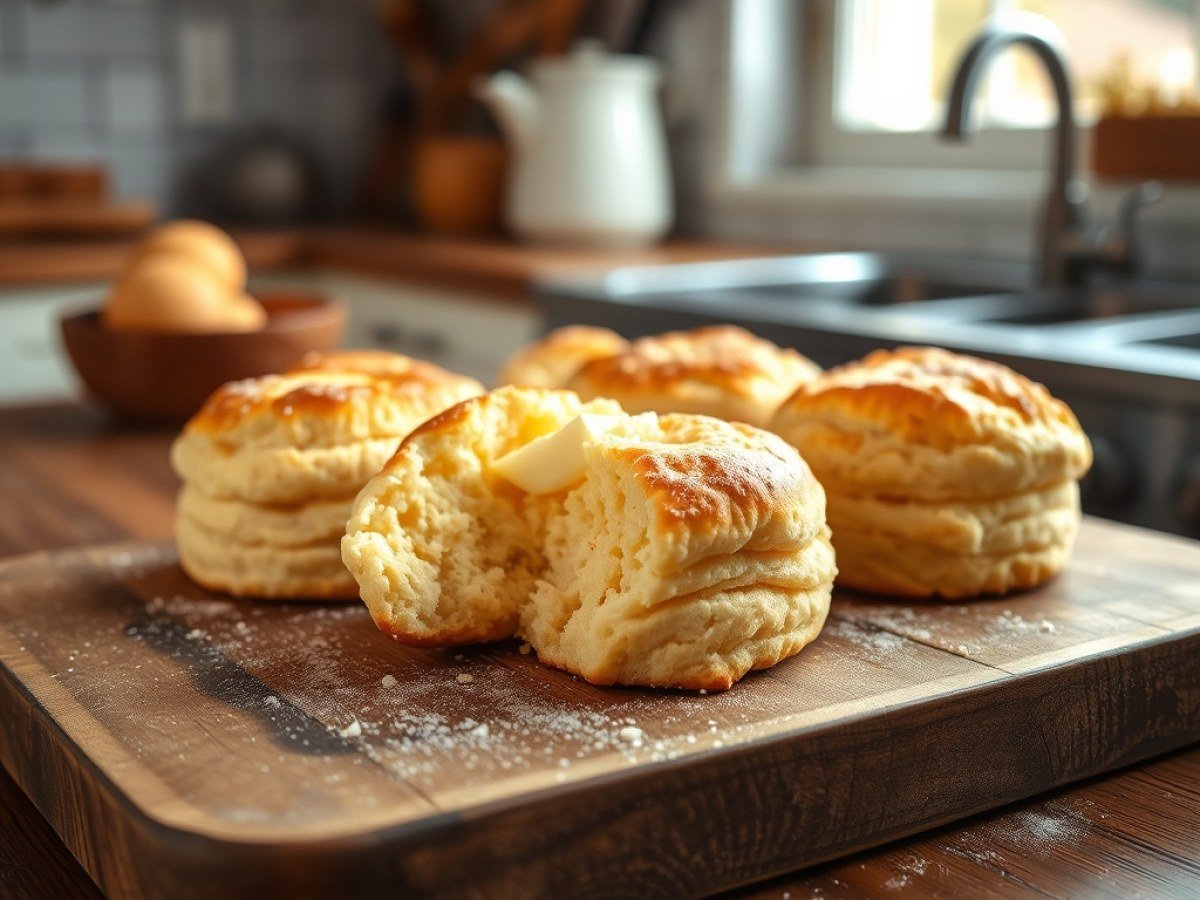
What Makes This Buttermilk Biscuits Recipe So Good
Cold buttermilk and cold butter are the engine here. When the dough hits a 450°F oven, the water in the butter and buttermilk turns to steam, and that steam forces the dough apart into distinct layers. If the butter is warm, it just melts into the flour and you get a dense, cakey biscuit instead.
The folding is the second key. Folding the dough three times — like closing a book — stacks layers of butter and dough on top of each other without developing much gluten. That means structure plus tenderness, which is exactly what you want. A hot oven sets the rise fast before the butter can leak out, giving you that crisp exterior and fluffy interior.
And there’s no rolling pin involved. You pat and fold, which keeps the dough from getting overworked and keeps cleanup simple. Fewer tools, better biscuits.
Servings: 4 | Prep time: 15 minutes | Cook time: 15 minutes | Total time: 30 minutes
Ingredients
- 2 cups (240g) all-purpose flour, plus more for dusting
- 1 tablespoon baking powder
- 1/2 teaspoon baking soda
- 1 teaspoon granulated sugar
- 1 teaspoon fine sea salt
- 8 tablespoons (113g) unsalted butter, cold, cut into 1/2-inch cubes
- 3/4 cup (180ml) cold buttermilk, plus 2 tablespoons for brushing
- 2 tablespoons melted butter, for brushing (optional)
Instructions
- Preheat and prep: Preheat oven to 450°F (230°C). Line a baking sheet with parchment paper. Keep the butter and buttermilk in the refrigerator until the moment you need them — this is not the time to let them sit on the counter.
- Whisk dry ingredients: In a large bowl, whisk together the flour, baking powder, baking soda, sugar, and salt until evenly combined. Break up any lumps of baking powder so you don’t get bitter pockets.
- Cut in cold butter: Add the cold butter cubes and toss to coat them in flour. Use a pastry blender or your fingertips to cut the butter into the flour until the mixture looks like coarse meal with some pea-sized butter lumps still visible. Work quickly — if the butter starts to feel greasy, pop the bowl in the freezer for 5 minutes.
- Add buttermilk: Pour the cold buttermilk over the flour mixture. Stir with a fork just until the dough comes together. It will look shaggy and slightly sticky — that’s correct. Do not overmix or you’ll develop gluten and end up with tough biscuits.
- Fold the dough: Turn the dough onto a lightly floured surface and pat it into a rough 1-inch-thick rectangle. Fold the dough in half like you’re closing a book, then pat it back into a rectangle. Repeat this folding two more times, flouring your hands and the surface as needed. The final rectangle should be about 1 inch thick.
- Cut the biscuits: Dip a 2.5-inch round biscuit cutter in flour and press straight down into the dough — don’t twist. Twisting seals the edges and stops the rise. Cut as many biscuits as you can, then gently pat the scraps together and cut the rest. Place biscuits 1 inch apart on the prepared sheet.
- Brush and bake: Brush the tops with 2 tablespoons buttermilk or melted butter. Bake for 12–15 minutes, until the tops are golden brown and the biscuits have risen tall. Rotate the sheet halfway through for even browning.
- Cool and serve: Remove from the oven and let cool on the sheet for 2 minutes, then transfer to a wire rack. Serve warm. If you want extra shine, brush with melted butter right after baking.


Tips & Variations
Keep everything cold. Freeze the butter for 10 minutes before cutting it, and use buttermilk straight from the fridge. Cold ingredients are the single biggest factor in how tall your biscuits rise.
Don’t twist the cutter. Press straight down and lift straight up. Twisting seals the cut edges together, which traps the layers and prevents them from separating in the oven.
Chill before baking. For extra flaky layers, chill the cut biscuits for 10 minutes before they go in the oven. This re-firms the butter so it creates steam at exactly the right moment.
No buttermilk? No problem. Swap in 3/4 cup whole milk plus 1 tablespoon lemon juice, and let it sit for 5 minutes until it looks slightly curdled. The acidity tenderizes the dough and activates the leaveners.
Savory add-ins. Fold in 1/2 cup shredded sharp cheddar or a handful of chopped chives during the folding step for a savory twist that works with dinner.
Sweet finish. Brush with honey butter after baking instead of plain melted butter if you’re serving these for breakfast.
Use a sharp cutter. A dull cutter or a knife dragged through the dough crushes the edges. Dip your cutter or knife in flour between cuts for clean edges and a better rise.
Storage & Make-Ahead
Store baked biscuits in an airtight container at room temperature for up to 2 days. Reheat in a 350°F oven for 5 minutes to bring back the crisp exterior. To freeze, place cooled biscuits in a zip-top bag and freeze for up to 2 months; reheat from frozen at 350°F for 10 minutes.
For make-ahead, cut the biscuits and freeze them unbaked on a sheet, then transfer to a bag. Bake from frozen at 450°F for 18–20 minutes — no thawing needed. This is the best way to have fresh biscuits on demand.
Nutrition Information
- Calories: 310
- Carbohydrates: 26g
- Protein: 5g
- Fat: 20g
- Saturated Fat: 12g
- Fiber: 1g
- Sugar: 2g
- Sodium: 480mg
These values are an estimate and will vary based on exact ingredients and portion sizes.
Quick Questions
Can I use salted butter instead of unsalted?
Yes, but reduce the added salt to 1/2 teaspoon so the biscuits don’t turn out overly salty. Salted butter also contains a bit of water, which can slightly affect texture, but it works fine in a pinch.
Why are my biscuits flat?
Flat biscuits almost always mean the butter got too warm or the dough was overworked. Keep everything cold, handle the dough gently, and don’t twist the cutter. Also check that your baking powder is fresh — expired leaveners won’t lift the dough.
Can I make these biscuits without buttermilk?
Yes. Stir 1 tablespoon lemon juice or white vinegar into 3/4 cup whole milk and let it sit for 5 minutes. The acidity tenderizes the dough and activates the leaveners, giving you the same tender rise.
How do I get tall, flaky layers?
The folding technique is key: pat, fold, and repeat three times to create distinct layers of butter and dough. Cut straight down with a sharp cutter and don’t twist — twisting seals the edges and blocks the rise.