Cheddar Bay Biscuits Recipe

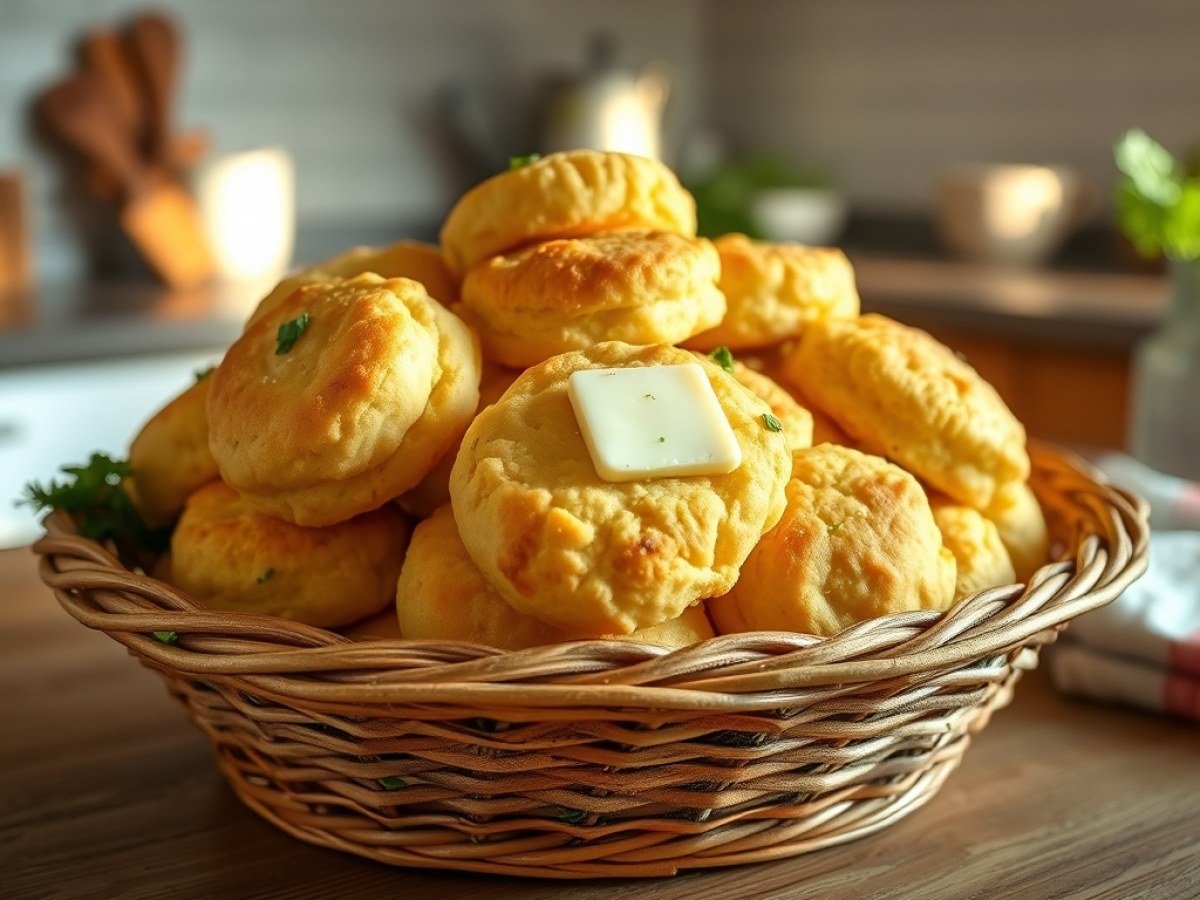
Ever wonder why those Cheddar Bay Biscuits from Red Lobster are so addictive? It’s not the endless shrimp—it’s the biscuits. And the secret is simpler than you’d think: cold butter, sharp cheddar, and a garlic butter brush that hits them the second they leave the oven.
You can absolutely make them at home. No special equipment, no rolling pin, no cutting rounds—just a bowl, a fork, and a hot oven. From first scoop to buttery first bite, you’re looking at about 30 minutes.
This recipe nails that flaky, cheesy, garlicky magic. Follow it once and you’ll never buy a boxed mix again.
The Secret to Great Cheddar Bay Biscuits
Cold butter is doing the heavy lifting here. When those cold cubes hit a 450°F oven, the butter melts and throws off steam, forcing the dough apart into flaky layers. Warm butter just soaks in and you get flat, dense pucks.
Sharp cheddar and garlic butter handle the flavor. The cheese melts into salty pockets, and the butter brush—applied while the biscuits are still screaming hot—soaks straight into the crust instead of sitting on top.
And the drop method means no fuss. Scoop, drop, bake. That’s it.
What separates a good biscuit from a great one comes down to a few small decisions. The size of your butter pieces matters more than you’d think: you want a mix of coarse meal and distinct pea-sized chunks. If everything is uniform and sandy, you lose the steam pockets. If the chunks are too big, the dough won’t hold together and you’ll get greasy pockets. Aim for “coarse crumbs with visible butter.”
The buttermilk does double duty too. Its acid reacts with the baking powder for extra lift, and its fat and tang keep the crumb tender rather than dry. That’s why the substitution works but never tastes quite identical. If you have real buttermilk in the fridge, use it.
Finally, resist the urge to smooth the dough. Every extra stir develops gluten, and gluten is the enemy of a tender biscuit. A shaggy, slightly lumpy dough that barely holds together is exactly what you want going into the oven.
Ingredients
Servings: 4 | Prep time: 10 minutes | Cook time: 20 minutes | Total time: 30 minutes
- 2 cups all-purpose flour
- 1 tablespoon baking powder
- 1 teaspoon garlic powder
- 1/2 teaspoon salt
- 1/4 teaspoon cayenne pepper (optional)
- 1/2 cup cold unsalted butter, cubed
- 1 cup shredded sharp cheddar cheese
- 3/4 cup cold buttermilk
- For the topping: 3 tablespoons melted butter, 1/2 teaspoon garlic powder, 1/4 teaspoon dried parsley
A few notes on the ingredients before you start. Use a block of cheddar you shred yourself if you can—pre-shredded cheese is tossed with cellulose and potato starch to keep it from clumping, and those additives can leave the biscuits slightly dry and powdery. It’s a small upgrade that makes a real difference.
If you don’t keep cayenne on hand, a pinch of smoked paprika or even a few grinds of black pepper works as a substitute. It won’t add heat, but it adds a subtle warmth that balances the richness. Skipping it entirely is fine too—the recipe works either way.
Instructions
- Preheat and Prep: Preheat oven to 450°F (230°C). Line a baking sheet with parchment paper or a silicone mat. A hot oven is non-negotiable—don’t open the door early to peek.
- Mix Dry Ingredients: In a large bowl, whisk together flour, baking powder, garlic powder, salt, and cayenne if using. Give it a good 20 seconds so the leavener is evenly distributed.
- Cut in Butter: Add cold cubed butter. Use a pastry cutter or your fingers to cut butter into flour until mixture resembles coarse crumbs with some pea-sized butter pieces remaining. Those visible butter bits are your flaky layers—stop while they’re still there.
- Add Cheese and Buttermilk: Stir in shredded cheddar. Pour in cold buttermilk and stir with a fork until just combined. Do not overmix; the dough will be sticky and shaggy. If it looks a little dry at the bottom, one extra tablespoon of buttermilk is fine—but don’t chase a smooth dough.
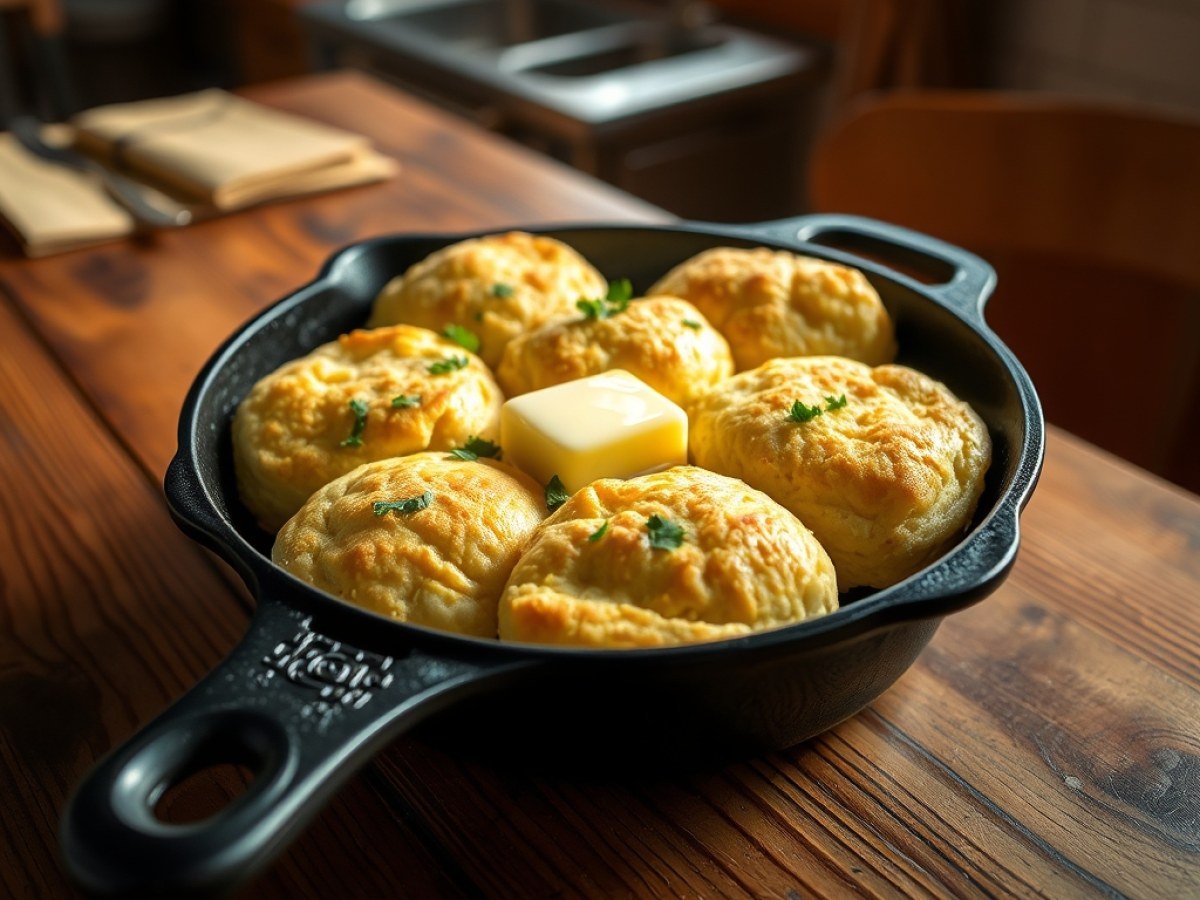
- Drop and Bake: Drop 1/4-cup mounds of dough onto the prepared baking sheet, about 2 inches apart. Bake for 18–20 minutes, until golden brown on top and the edges look set. You’ll see cheese crisping at the edges—that’s exactly right.
- Brush with Garlic Butter: While biscuits bake, mix melted butter, garlic powder, and parsley. As soon as biscuits come out of the oven, brush generously with garlic butter. Use all of it—the biscuits will drink it up. Serve warm.

If you’re working with your hands instead of a pastry cutter, rub the butter between your fingertips quickly and lift your hands above the bowl so the mixture falls back in—this keeps everything cool. Work fast, and if the butter starts to feel soft or greasy, pop the whole bowl in the freezer for five minutes before continuing.
When dropping the dough, an ice cream scoop with a release handle keeps the mounds uniform, which means even baking. If you don’t have one, two spoons work fine—just aim for roughly the size of a golf ball and don’t compress the dough. Pile it loosely.
The garlic butter brush is where people underdo it. Don’t be shy. Brush once, wait a beat, then brush again with any butter that pooled on the baking sheet. The biscuits absorb it almost instantly, which is why they taste so rich.
Tips & Variations
- Keep ingredients cold: Cold butter and buttermilk are key to flaky biscuits. Pop them in the freezer for 10 minutes if they warm up while you’re prepping.
- Don’t overmix: Stir until just combined; overmixing develops gluten and makes biscuits tough. Lumps are your friend.
- Cheese swap: Try sharp white cheddar, Gruyère, or a mix of cheddar and Parmesan for different flavor profiles.
- Add-ins: Fold in cooked bacon bits, chopped chives, or jalapeños for a twist.
- Make ahead: Freeze unbaked dough mounds on a baking sheet, then transfer to a freezer bag. Bake from frozen, adding 2–3 minutes to baking time.
- For extra garlic flavor: Add a pinch of garlic powder to the dough itself, or brush with more garlic butter after baking.
A common mistake is adding too much liquid at once. Pour the buttermilk in two additions and stop as soon as the dough comes together—you may not need every last drop depending on the humidity in your kitchen and how absorbent your flour is. If the dough feels wet and tacky rather than shaggy, sprinkle in a tablespoon of flour.
Another frequent trap: baking on a dark nonstick sheet. Dark surfaces brown faster and can scorch the bottoms before the centers cook through. If that’s all you have, drop the oven temperature to 425°F and check at 15 minutes.
For a bakery-style look, mix a little extra melted butter with a pinch of flaky sea salt and drizzle it over the tops right before serving. The contrast of salt and sweetness is a nice touch if you’re serving these alongside a salad or soup.
Storage & Make-Ahead
Store leftover biscuits in an airtight container at room temperature for up to 2 days. Reheat in a 350°F oven for 5 minutes or in the microwave for 20 seconds. For longer storage, freeze baked biscuits for up to 2 months; reheat in a 350°F oven for 10 minutes.
Microwaving works in a pinch, but it softens the crust and makes the biscuits a bit chewy. The oven brings back that crisp, buttery shell. If you’re reheating from frozen, wrap them loosely in foil for the first 5 minutes to prevent the outside from drying out, then uncover for the last 5.
Nutrition Information
- Calories: 380 kcal
- Carbohydrates: 26 g
- Protein: 9 g
- Fat: 26 g
- Saturated Fat: 16 g
- Fiber: 1 g
- Sugar: 2 g
- Sodium: 480 mg
Values are an estimate and will vary with exact ingredients and portion sizes.
Questions About Cheddar Bay Biscuits
Can I use regular milk instead of buttermilk?
Yes, but buttermilk adds tang and tenderness. To substitute, mix 3/4 cup milk with 1 tablespoon lemon juice or vinegar and let sit for 5 minutes until slightly curdled.
Why are my biscuits flat?
Flat biscuits usually mean old baking powder or overmixed dough. Check your baking powder’s freshness and handle the dough gently—stop stirring the moment the flour disappears.
Can I make these gluten-free?
Yes, use a 1:1 gluten-free flour blend with xanthan gum. The texture will be slightly different but still delicious. Bake a minute or two longer if the centers look pale.